 EN
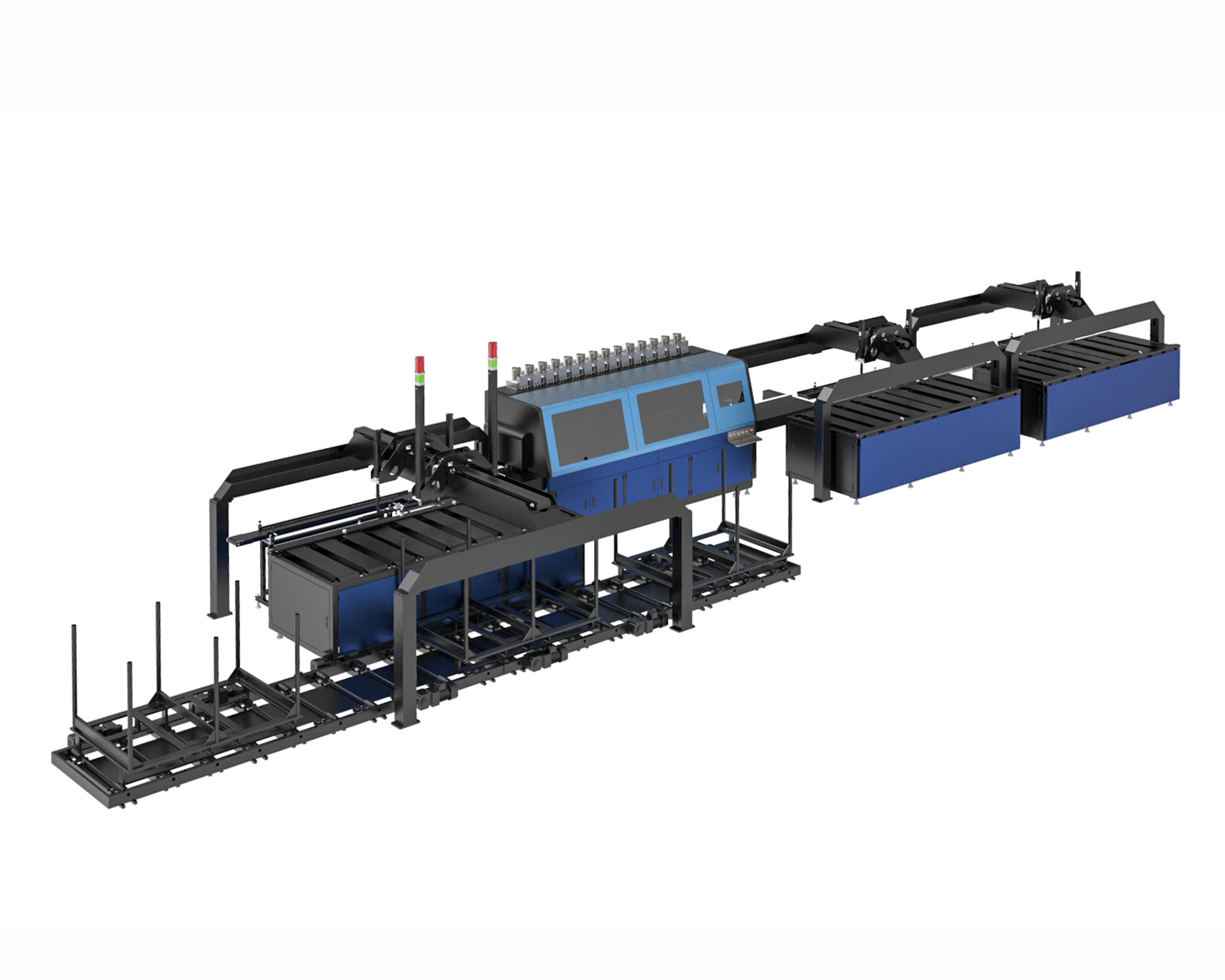
A customized printer is not a standard machine with a few extras bolted on. The distinction matters because the word “custom” gets used loosely. In practice, a customized printer for industrial inkjet work starts from the production requirement outward: the substrate, the transport system, the ink chemistry, the curing method, and the communication protocol with the rest of the line are all specified around the job the machine has to do, rather than around a fixed chassis that the buyer then has to work around. That shift in starting point is what separates a tailored system from a modified off-the-shelf unit, and it changes the economics of the whole project.
Why a standard printer leaves money on the table
Every standard industrial printer carries a set of design compromises that were reasonable for the broadest possible market. The head standoff is set for a typical substrate thickness. The curing lamp is positioned for a typical ink load. The I/O block supports the protocols the manufacturer decided were common enough to include. On a line that runs one familiar material at one familiar speed, those compromises may be close enough that nobody notices. On a line built to solve a specific production problem, the gap between the machine and the job shows up in places that never make it onto a capital request form: an extra operator stationed at the printer to catch defects, a line speed trimmed by fifteen percent to keep the curing within tolerance, a manual registration step that exists only because the printer cannot see the mark the upstream machine already printed.
None of these costs are invisible because they are small. They are invisible because they are absorbed into daily operations as normal. The operator who babysits the printer becomes part of the shift pattern. The trimmed line speed becomes the assumed production rate. The manual step becomes a work instruction. A customized printer is an attempt to design those compromises out of the line before the machine is built, rather than paying for them shift after shift for the life of the asset.
Integration is where customization earns its keep
The electrical and controls side of the integration is where the difference between a tailored build and a standard machine becomes most concrete. A factory line is not a collection of isolated machines that happen to sit near each other. The filler, the labeller, the case packer, and the line controller exchange handshakes, fault states, and production counts continuously. A standard printer often arrives with a generic discrete I/O block and a fixed protocol list. When the plant’s line controller runs on EtherCAT and the printer only speaks discrete signals, the integration becomes a patchwork of gateways and converters that works well enough on day one and produces obscure fault conditions six months later.
A customized build matches the printer’s control architecture to the plant’s automation stack from the start. That does not mean every custom machine needs EtherCAT or Profinet. It means the protocol choice is made with the line controller in mind, not left as an afterthought. The same logic applies to the physical interface: conveyor height, infeed and outfeed transitions, and the location of the print station relative to upstream and downstream equipment are specified together, so the printer behaves like a native station on the line rather than a foreign device that needs translation.
| Integration factor | Standard off-the-shelf printer | Customized printer |
|---|---|---|
| Protocol matching | Limited to built-in options, often discrete I/O only | Matched to plant standard (EtherCAT, Profinet, EtherNet/IP) |
| Integration engineering hours | 40–120 hours typical | 10–20 hours typical |
| Signal conversion hardware | External gateways often required | None, native protocol |
| Startup tuning after integration | 2–5 days | Under 1 day |
The hours in that table are not a marketing estimate. They come from mid-complexity packaging and converting lines, and they explain why the purchase price of a printer is a poor proxy for the real investment. Engineering hours and startup tuning do not appear on a quotation, but they land on the project schedule and in the first month of production.
Total cost of ownership runs through uptime and consumables
Downtime is where the arithmetic gets uncomfortable. Siemens’ True Cost of Downtime report puts unplanned downtime at roughly $36,000 per hour in fast-moving consumer goods and up to $2.3 million per hour in automotive manufacturing. A printer that needs an extra day of integration troubleshooting at startup, or that forces a speed reduction to cure a heavy ink film, does not just underperform on a datasheet. It eats into that number repeatedly, every shift the line runs below its intended rate.
Consumable lock-in follows the same pattern. Standard printers often ship with a narrow approved materials list, which creates single-source dependency for inks, cleaners, and spare parts. A customized specification can include an ink qualification program that certifies a second supplier during the build phase, before the machine is even installed. That step protects the operation from price increases and supply interruptions that are entirely outside the buyer’s control once the printer is locked into one ink vendor.
The total cost picture also has to include the labor around the printer. Pre-treatment, part handling, inline inspection, and sorting often account for a larger share of system cost than the print engine itself. A machine that integrates cleanly with those stations protects the return on the whole cell, not just the printing step. When a printer is specified around the line rather than around a chassis, the labor and handling savings compound alongside the print quality improvement.
A converting line where the printer had to fit the conveyor, not the other way around
One packaging converter running folding cartons had a straightforward problem that standard machines could not solve cleanly. The existing folder-gluer had a fixed conveyor geometry and a line controller that spoke Profinet, and the carton stock ranged from lightweight coated board to heavier recycled grades within the same shift. A standard printer would have required a conveyor modification to match the infeed height, plus a protocol gateway to talk to the line controller. The modified machine would have worked, but every carton grade change would have required the operator to re-tune the head standoff and the curing intensity by hand.
The customized build specified the print station around the existing conveyor geometry, matched the Profinet interface natively, and included a substrate recipe system that stored the head height, curing power, and ink waveform for each board grade. Changeover became a recipe selection rather than a manual re-tuning exercise. That is not a dramatic story about a new printhead. It is a story about the machine being designed around the line’s existing constraints instead of asking the line to absorb the printer’s constraints.
Where customization is the wrong call
Customization is not universally superior, and treating it as the default is a reliable way to overspend. A tailored machine costs more upfront, takes longer to deliver, and demands that the buyer knows the process well enough to specify requirements accurately. A shop buying its first digital printer and still experimenting with substrates may be better served by a standard machine that offers a known baseline, common spare parts, and a support network that has seen the exact configuration hundreds of times. When the application is still moving, locking in a custom specification can freeze the wrong assumptions into steel.
The decision turns on whether the gap between the standard machine and the application will be paid for over the asset’s life in engineering hours, scrap, and lost throughput. When the substrate is known, the volume is stable, and the cost of working around a mismatch is measurable, the premium for a tailored build is usually the cheaper path. When those conditions are absent, a standard machine is the honest choice. A configure-to-order approach can bridge the middle ground, starting with a modular architecture that can expand in width, color, or process capability as the production requirement becomes clearer, rather than committing to a fully bespoke build on day one.
For operations in that middle zone, the configuration work happens before the machine is built. NOVA Inkjet Technology approaches customized platforms through print configuration testing and substrate-specific engineering, matching the head, ink, curing, and transport selections to the production requirement rather than forcing every line into the same fixed specification. The manufacturing and quality control processes follow the configuration, so the tailored build stays a controlled engineering exercise rather than a one-off experiment.