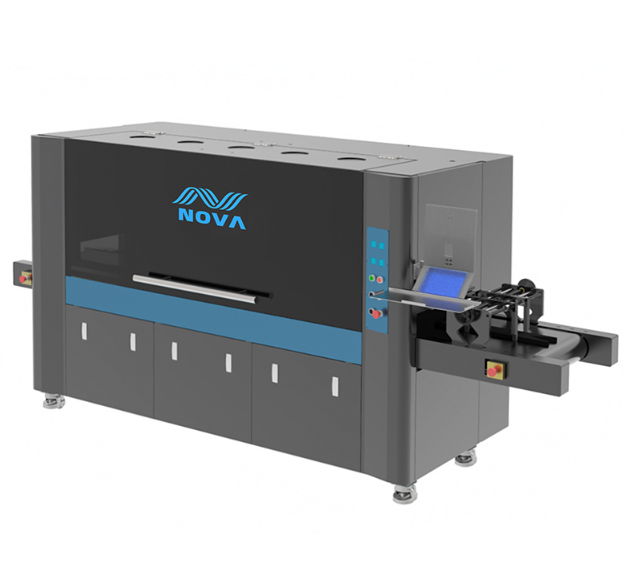
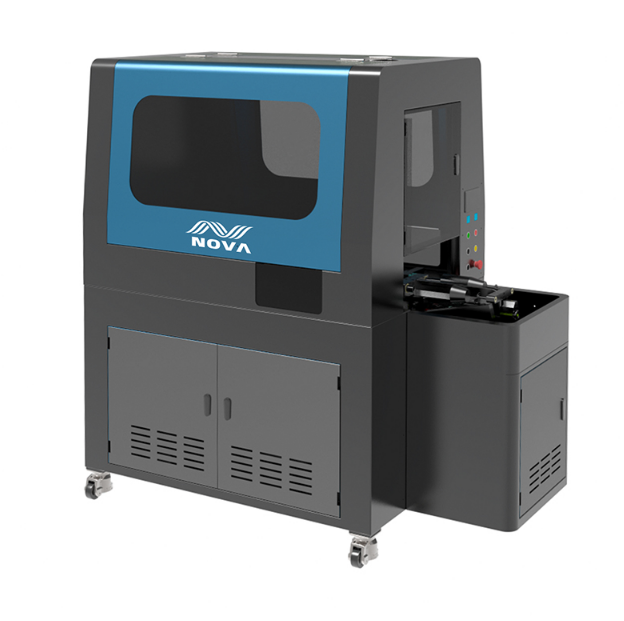
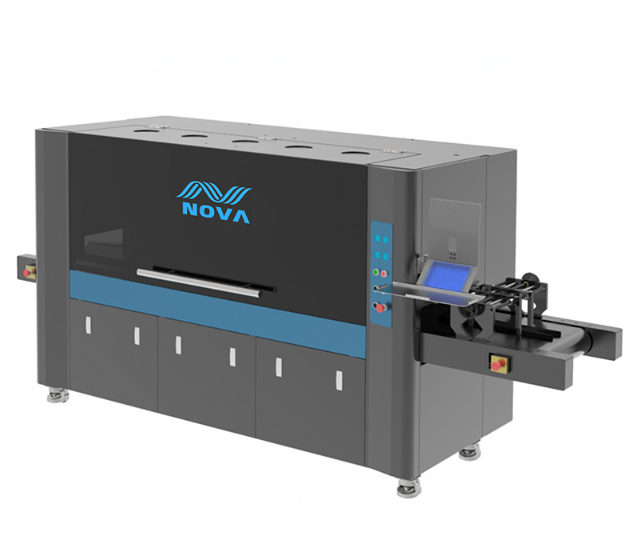
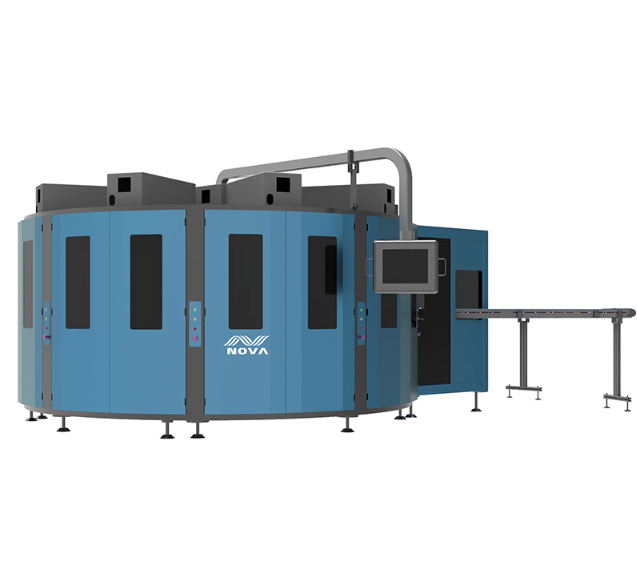
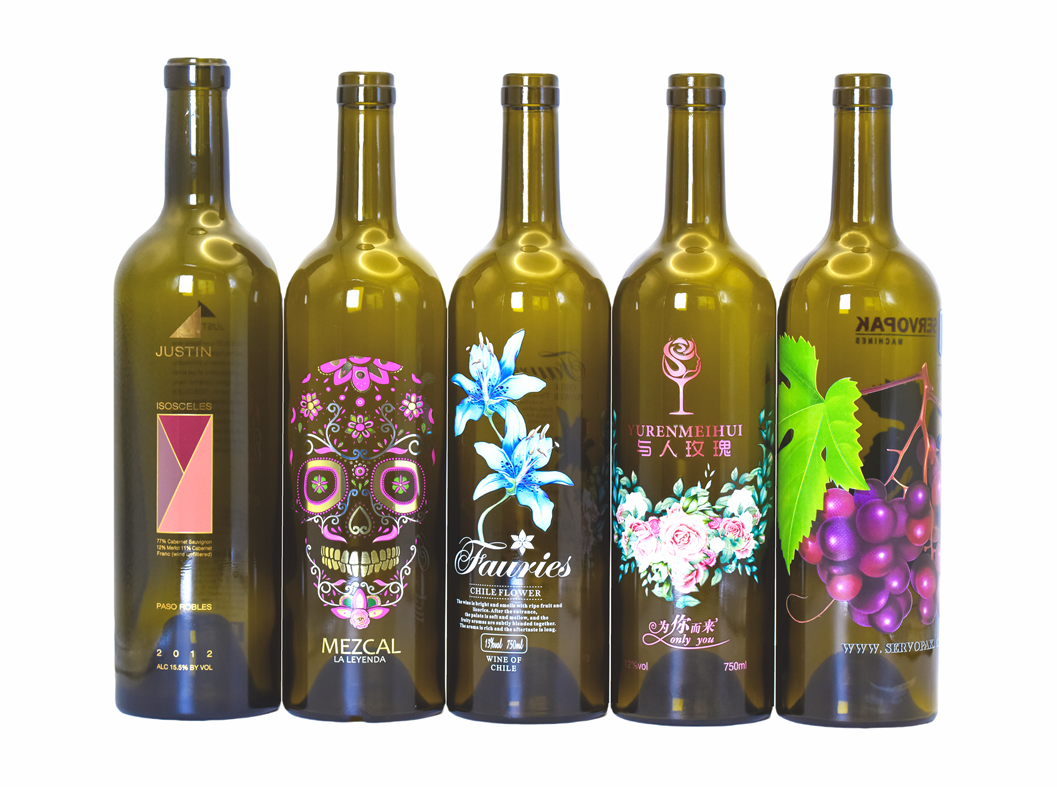
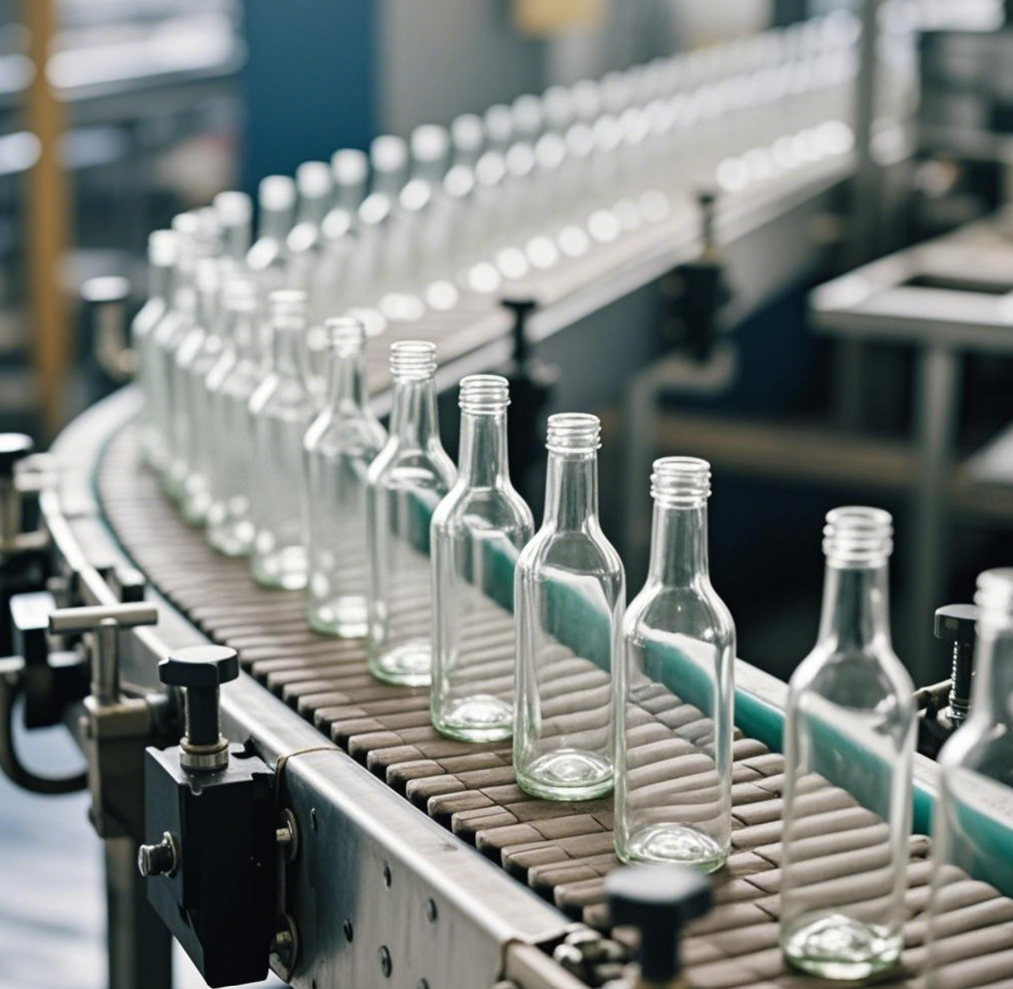
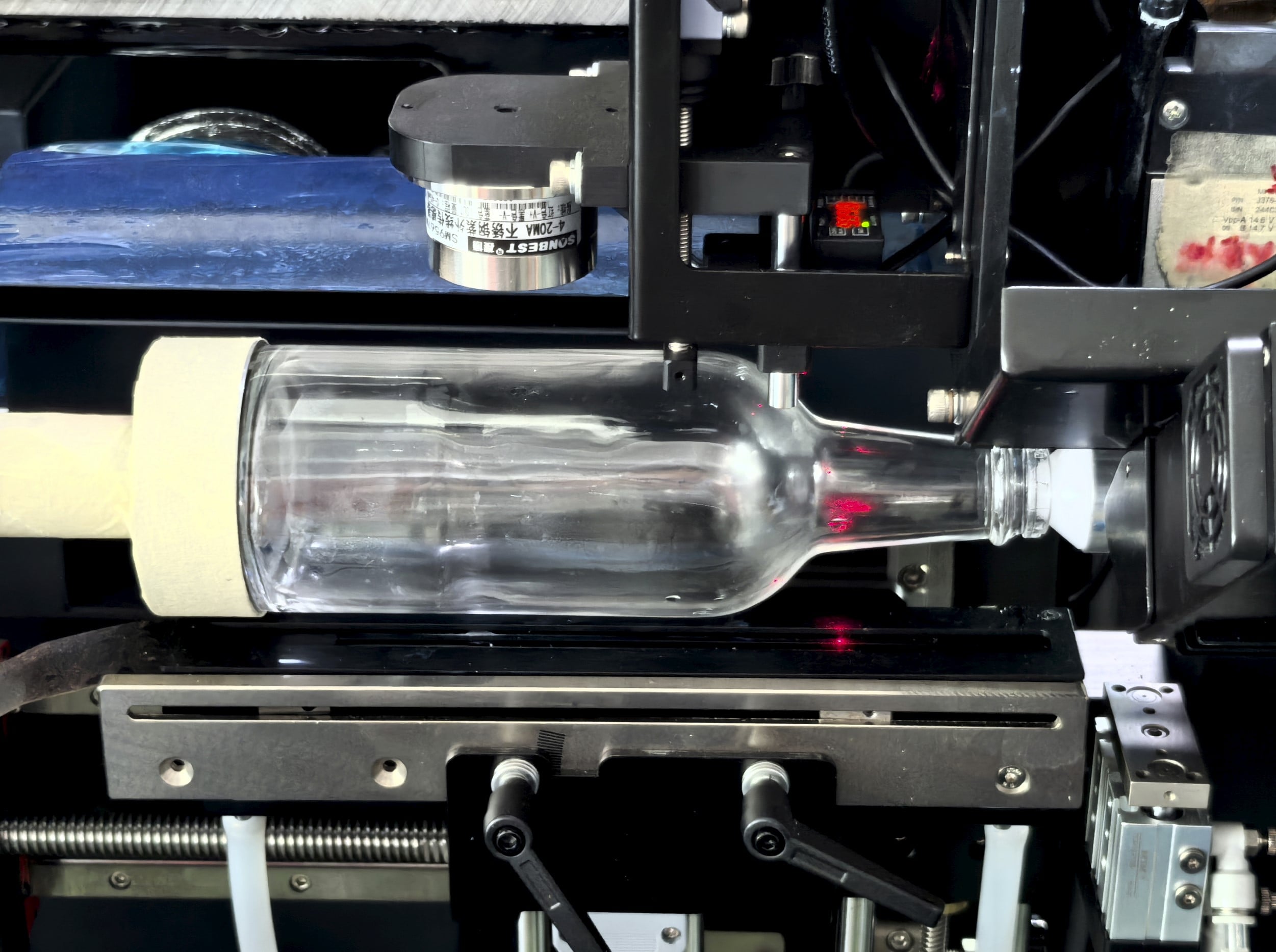
The glass packaging industry is shifting from traditional labeling to direct digital decoration, and NOVA Inkjet Technology’s industrial glass bottle production printer is at the forefront. Built for demanding production environments, our printer combines high-speed single-pass UV printing with robust automation to deliver millions of decorated bottles annually. At a French bottling plant, one of our production printers replaced three rotary screen machines, reducing headcount from nine operators to two while increasing output by 20%. The machine architecture uses a centralized ink supply with 20-liter tanks, enabling non-stop runs of up to 16 hours between refills. UV LED curing stations positioned after each color prevent inter-color bleed, a common issue in high-speed production, and cure thick varnish layers without slowing the line. NOVA’s proprietary vision system monitors every bottle in real time, rejecting defects and automatically adjusting print parameters to maintain Delta E <1.8. With a heavy steel frame and active vibration damping, the printer holds precise registration even on uneven factory floors. CE, FCC, and ISO 13849 safety certifications assure global compliance. Investing in an industrial glass bottle production printer from NOVA means securing a competitive edge through lower per-unit cost, unmatched speed, and the agility to respond instantly to market trends. FAQ Title: Industrial Glass Bottle Production Printer FAQ
Q1: What production speed can I expect from this printer? A1: NOVA’s industrial glass bottle production printer achieves up to 60 bottles per minute, depending on image coverage and bottle diameter. Linear motion and simultaneous multi-color printing ensure consistent speed, capable of exceeding 3,000 bottles per hour in continuous operation.
Q2: How does the printer handle glass surface coatings? A2: An inline pretreatment module applies primer or flame treatment to modify surface energy, ensuring strong ink adhesion on coated, silane-treated, or cold-end sprayed glass. A beverage group validated the process with 100% tape test pass after 500 dishwasher cycles.
Q3: Can it integrate into an existing high-speed filling line? A3: Yes, NOVA provides custom conveyor interfaces and synchronization signals to match your line speed. One installation integrated between a depalletizer and filler, printing at 80 bottles per minute with accumulation buffers, causing zero filler stoppages over a six-month period.
Q4: What are the maintenance requirements? A4: The production printer is designed for minimal intervention. Automated printhead cleaning and capping run during brief line gaps. Quarterly preventive maintenance takes four hours. Predictive algorithms alert technicians to wear items, and typical mean time between failures exceeds 4,000 hours.
Q5: What inks are used for food-grade glass bottles? A5: We supply low-migration UV inks certified to EUPIA and Swiss Ordinance A standards for indirect food contact. These inks meet Nestlé and FDA guidance, making them suitable for beverage, spirit, and food bottles where trace chemical migration limits are strict.