
 EN
EN
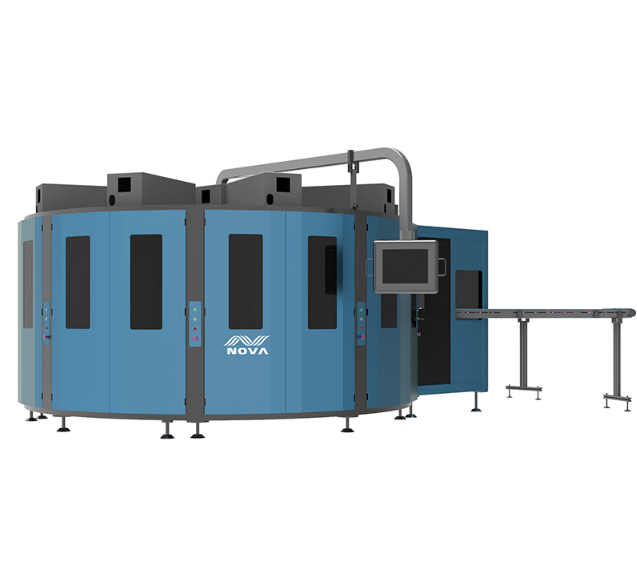
The Assumption Built Into Every Standard Printer
An off-the-shelf industrial printer ships with a set of assumptions baked into its engineering. The designers picked a printhead type, a curing wavelength, a transport mechanism, and a control interface based on what the broadest slice of the market supposedly needs. Those assumptions might be close to what a given production line requires, but they are rarely exact. The mismatch shows up in small, persistent ways. A curing lamp positioned two centimeters too far from the print zone. A conveyor height that sits 15 millimeters below the ideal transfer point. An ink system tuned for a viscosity range that is slightly off from the formulation a coating line already has qualified. Each of these gaps translates into a compromise an operator works around every shift, adjusting speeds, tweaking settings, accepting a defect rate that is just barely tolerable because the machine was never built for that specific job.
When the Substrate Dictates the Machine Configuration
Standard printers are designed around a narrow range of substrate types, typically flat rigid sheets or flexible webs within a defined thickness window. Reality is messier. A manufacturer printing on cylindrical silicone rubber parts that are 85 durometer on the Shore A scale has entirely different requirements from a shop printing on coated aluminum panels. The silicone part deforms under nip pressure, so the transport must avoid pinch rollers. The coated aluminum scratches if the feed table has high friction points. A standard printer ships with a generic feed system that handles neither case optimally. A customized printer starts from the substrate outward, engineering the part handling, the printhead standoff, and the curing configuration around the exact material the line runs every day. The difference is not theoretical. A medical tubing company in Ireland spent seven months trying to adapt a standard flatbed printer to run silicone catheter sections before commissioning a customized machine with vacuum mandrel transport and a low durometer contact surface. The customized line was producing within three days of installation.
The Integration Penalty of Generic Interfaces
Most factories do not run printers in isolation. The printer sits on a line with upstream fillers, cappers, inspection systems, and downstream cartoners or palletizers. A standard printer arrives with a generic I/O block and a fixed set of communication protocols. If the plant's line controller speaks EtherCAT and the printer only offers discrete I/O, integration becomes a kludge of signal converters, time delays, and workaround logic that creates obscure fault conditions. A customized printer ships with the electrical architecture matched to the plant's existing automation stack. An engineer specifies the fieldbus protocol, the handshake signals, and the fault hierarchy during the design phase, so the printer talks to the line natively. The table below quantifies the integration burden in typical mid complexity lines.
| Integration Factor | Standard Off-the-Shelf Printer | Customized Printer |
|---|---|---|
| Protocol matching | Limited to built-in options, often discrete I/O only | Matched to plant standard (EtherCAT, Profinet, EtherNet/IP) |
| Integration engineering hours | 40–120 hours typical | 10–20 hours typical |
| Signal conversion hardware | External gateways often required | None, native protocol |
| Fault diagnostics depth | Generic error codes | Mapped to line SCADA alarm hierarchy |
| Startup tuning after integration | 2–5 days | Under 1 day |
Throughput Bottlenecks That Standard Specs Ignore
A printer's rated speed, printed on the datasheet in square meters per hour, tells a story that rarely matches the production floor. That number assumes a specific image coverage, a specific resolution, and a specific curing profile. Change any of those, and the real throughput shifts, sometimes dramatically. A standard printer with fixed lamp power and fixed carriage speeds forces the operator into a narrow operating window. A customized printer sizes the UV system, the ink delivery, and the motion control to the actual print mode the job requires. If a packaging converter runs 90 percent of their work at 600 by 600 dpi with heavy white underbase, the customized machine specs larger UV arrays and higher flow ink supply from day one. The standard machine, in contrast, forces a speed reduction to get adequate cure on that white layer, cutting real throughput by 30 percent or more compared to what the datasheet implies.
The Consumable Lock-In Nobody Mentions
Standard printers often ship with a recommended ink set and a narrow list of approved consumables. Stray outside that list, and the warranty pressure rises, the technical support gets reluctant, and the performance becomes unpredictable. This creates a single source dependency for ink, cleaners, and spare parts that erodes negotiating leverage over time. A customized printer specification can include an ink qualification program that certifies the customer's preferred ink supplier from the build phase, baking cross compatibility into the system before it ships. A large contract packaging operation negotiated this into their customized printer purchase and saved roughly 22 percent on annual ink spend by qualifying a second source during the engineering stage, an option that the standard machine's approved materials list simply did not permit.
Where a Standard Machine Actually Wins
Customization is not universally superior. It costs more upfront, takes longer to deliver, and requires the buyer to know their process well enough to specify requirements accurately. A company ordering its first digital printer, still experimenting with substrates and applications, may be better served by a standard machine that provides a known baseline for learning. Standard printers also benefit from pooled field data, common spare parts inventories, and faster technical support response, since the support team deals with an identical configuration across hundreds of installations. Customization makes sense when the production process is stable, the substrate is known, the volume justifies the engineering, and the cost of living with a compromise adds up to more than the premium for a tailored solution.
The decision between standard and custom is less about the hardware itself and more about whether the gap between the machine and the application will be paid for in engineering hours, scrap, and lost throughput over the life of the asset. Nova Inkj et operates on a configure to order model that bridges this gap, allowing print engine, curing, and transport selections that align with the production environment without starting from a blank sheet every time.