 EN
EN
The Hidden Cost of Label Inventory
Every pre-printed label sitting on a warehouse shelf represents cash that cannot be used for anything else. A beverage brand with 15 SKUs, each requiring labels in three sizes and two languages, can easily carry over 200 label SKUs in inventory. Some of those labels will become obsolete due to formula changes, regulatory updates, or rebranding before the roll is ever consumed. A spice and sauce co-packer in Texas calculated that they wrote off $24,000 in unused pressure sensitive labels in a single fiscal year, purely because client recipes changed mid contract. A bottle inkjet printer eliminates that exposure. The label exists as a digital file, printed directly onto the bottle on demand. When the barcode needs updating or the ingredient list changes, the file gets revised and the next bottle off the line carries the new artwork. No obsolete stock, no minimum order quantities from a label converter, and no warehouse shelf occupied by rolls that might never spin.
How Print on Demand Changes Production Logic
Conventional labeling forces production planners into a batch mindset. A run of 10,000 bottles needs 10,000 labels pulled from inventory, mounted on a labeler, and reconciled against the production order before the line ever starts. If the order changes mid shift, those labels go back into storage and the whole setup process repeats. Direct to bottle inkjet printing decouples the label from the physical supply chain. The production manager loads a file, selects a quantity, and the printer runs until the counter stops. Need to split a run into two label variants for A/B market testing? Program the split at the controller and the printer alternates automatically. A craft kombucha brand in Oregon used this capability to run six regional label variants on a single 5,000 bottle production block, something their old label applicator could not have managed without six separate setups and a lot of wasted liner material.
The Registration Battle Nobody Talks About
Applying a pre-printed label to a bottle sounds simple until the bottle is slightly tapered, the label material stretches under tension, and the adhesive tack varies with ambient humidity. Labelers fight these variables with peel plates, vacuum drums, and servo driven tension controls, and they still produce a measurable percentage of skewed, wrinkled, or flagged labels. Printing directly onto the bottle with an inkjet system removes the label substrate entirely. There is no liner to dispose of, no adhesive to ooze at the edges, and no alignment drift between a printed image and a separate piece of film. The ink becomes the label. Registration is governed by the bottle's rotation encoder, which maintains angular accuracy regardless of minor diameter variations. The comparison table below outlines the operational differences between the two approaches.
| Labeling Factor | Pre-Printed Label Application | Direct Bottle Inkjet Printing |
|---|---|---|
| Label inventory carrying cost | 12–18% of label spend annually | None |
| Minimum run for economic viability | 5,000–10,000 labels typically | 1 bottle |
| SKU changeover time | 20–45 minutes with label roll change | Under 2 minutes, file switch |
| Label alignment defect rate | 0.5–2% industry average | Below 0.2%, encoder locked |
| Material waste stream | Liner, matrix, obsolete stock | None beyond startup purge bottles |
Durability Without the Lamination Layer
Pre-printed labels often require a laminate overcoat to survive the supply chain. Bottles get wet in ice buckets, rub against each other in shipping cases, and face UV exposure on retail shelves. That laminate adds cost and introduces another material that complicates recycling. UV curable inkjet inks, when properly formulated and cured, can match the scuff resistance of a laminated label without the extra layer. Testing conducted under ASTM D5264 for Sutherland rub resistance shows that pigmented UV inkjet prints on glass and PET bottles can withstand over 200 rub cycles with minimal visible degradation. On a brewery's bottling line in Colorado, direct printed bottles survived a pasteurization tunnel at 140 degrees Fahrenheit followed by an ice water spray down without label peeling or ink delamination, a sequence that had previously caused edge lifting on roughly four percent of their pressure sensitive labels.
The Variable Data Opportunity
A pre-printed label is static. Every bottle in a run carries identical artwork, and adding variable data like batch codes, expiration dates, or sequential numbering requires a secondary coding process, often an inkjet or laser coder downstream. That secondary step creates a risk of mismatch between the label and the code. Direct bottle inkjet printing merges the label and the variable data into a single digital file printed in one operation. Every bottle can carry unique information without any additional equipment or process step. For a pharmaceutical syrup manufacturer, this meant serialized barcodes and tamper evident neck printing could happen simultaneously with the full color body label, compressing three operations into one and eliminating the possibility of a label code mismatch that could trigger a batch quarantine under 21 CFR Part 211.
Limits to Acknowledge Before Signing the Purchase Order
Direct bottle inkjet is not the answer for every labeling challenge. Bottles with extremely dark glass, such as amber or cobalt, often require a white ink underbase to make colors pop, which slows throughput and adds ink cost. High speed lines pushing beyond 300 bottles per minute may still favor pre-applied labels for the sheer mechanical throughput advantage of roll fed labelers running at full tilt. Surface preparation is non-negotiable, glass and plastic bottles need flame or plasma treatment to raise surface energy for proper ink adhesion, and skipping that step leads to field failures. The capital cost of an industrial bottle inkjet printer is also higher upfront than a basic pressure sensitive label applicator, though the total cost of ownership often tips in inkjet's favor when label inventory, changeover labor, and waste are factored over a two to three year horizon.
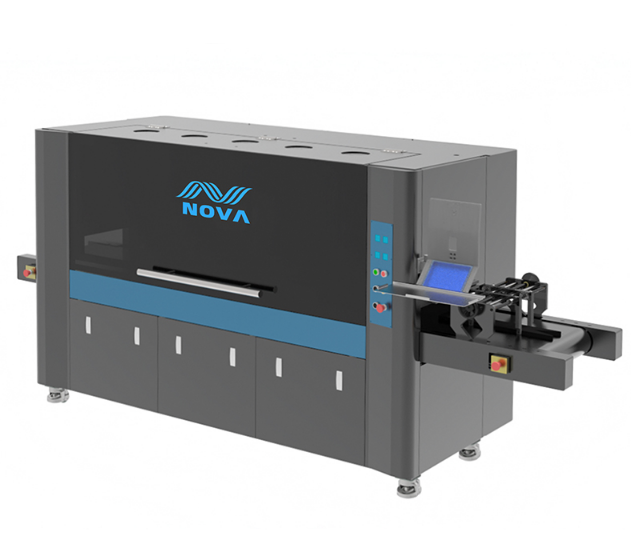
Direct bottle printing makes the strongest economic sense for operations managing multiple SKUs, frequent label revisions, short to medium runs, and products where the supply chain damage to traditional labels has been a persistent source of returns or customer complaints. Nova Inkj et offers cylinder inkjet platforms built to handle these exact conditions, with print engine configurations that balance speed, resolution, and ink coverage to match the production realities of beverage, cosmetic, and personal care bottling lines.