 EN
EN
The Short Answer: Almost Anything, With a Catch
Walk into any shop running UV printing operations, and the range of finished goods sitting on the shelves tells the real story. Acrylic display stands next to powder-coated metal nameplates. Wooden promotional coasters stacked beside glass bottles with full-wrap labels. Ceramic tiles leaned against aluminum composite panels. The variety is genuine, but the nuance matters more than the marketing brochures let on.
The core capability of UV printing comes down to one thing: the ink cures on contact with UV light rather than soaking into the substrate. That instant polymerization is what makes non-porous and low-surface-energy materials printable in the first place. But “printable” and “printable well” are two very different conversations.
Rigid Substrates: The Straightforward Ones
Flat and semi-rigid materials are where UV printing shines brightest. Acrylic sheets are probably the most common example—crystal-clear, easy to fixture, and they take UV ink with minimal fuss. The ink sits on top rather than penetrating, which means colors pop with a vibrancy that solvent-based processes can't match.
Metal presents a slightly different story. Untreated aluminum or stainless steel has a surface energy that repels most fluids, including UV inks. That's why many production environments use a primer layer or a specialized adhesion-promoting ink formulation before the color layers go down. The result, when done right, is a finish that holds up to abrasion and handling. A shop in the Midwest running custom industrial tags found that switching to a two-pass method—primer first, then color—reduced field returns by roughly 40% over six months, based on their internal tracking.
Glass is another rigid substrate that shows up constantly in UV printing workflows. Bottles, flat panels, and decorative pieces all take UV ink, but the adhesion window is narrower than on acrylic. Surface contamination from fingerprints or manufacturing residues will kill adhesion instantly. A quick wipe with isopropyl alcohol right before printing makes a measurable difference in cross-hatch test results.
Ceramics and tiles follow a similar pattern. Glazed surfaces behave like glass—they need clean, contaminant-free conditions. Unglazed or matte ceramics offer more mechanical bite for the ink to grip, which often translates to better durability without extra pretreatment steps.
| Material Type | Surface Energy | Pretreatment Typically Needed? | Primary Failure Mode |
|---|---|---|---|
| Acrylic | Medium-High | No | Scratches |
| Glass | Low | Yes (cleaning + primer often) | Adhesion failure |
| Bare Metal | Low | Yes (primer or plasma) | Peeling |
| Powder-Coated Metal | Medium | Sometimes | Chipping |
| Ceramic (glazed) | Low | Yes | Adhesion failure |
| Wood (sealed) | Medium | No | Ink spread |
Flexible and Textured Materials: Where It Gets Interesting
Leather, both genuine and synthetic, prints well under UV—provided the surface is relatively smooth and free of heavy oils. The ink cures to a flexible film that moves with the material rather than cracking. That said, high-flex applications like upholstery or frequently bent goods will eventually show stress fractures. The UV-cured ink layer is polymerized plastic, after all, and plastic has its limits.
Wood is a material that divides opinions in the UV printing community. Sealed or coated wood behaves like a rigid composite—predictable and consistent. Raw wood, on the other hand, is a nightmare. The grain absorbs ink unevenly, the surface energy varies across the board, and the natural oils in some species interfere with curing. A finishing coat before printing solves most of these problems, but that adds a step and changes the economics of the job.
Stone and slate are perfectly printable but demand careful attention to the print gap. Textured surfaces can exceed the 1.5 mm clearance that many flatbed printers maintain, leading to head strikes or blurred images. The workaround involves either shimming the material or using a printer with automatic height sensing—features that add cost but save headaches.
Cylindrical and Curved Objects: A Different Ballgame
The conversation changes entirely when the target object isn't flat. Cylindrical items like bottles, tumblers, and tubes require a rotary attachment or a dedicated cylindrical UV printer. The printing mechanism is the same—UV-cured ink deposited by inkjet heads—but the fixturing and motion control introduce new variables.
Plastic bottles, metal cans, and glass vials all fall into this category. The material compatibility list doesn't shrink; the execution complexity grows. A cylindrical printer needs to rotate the object at a consistent speed while the print heads fire in precise synchronization. Any slippage or speed variation shows up as banding or image distortion.
The UV curing system on cylindrical printers often uses LED arrays that wrap around the print zone, curing the ink almost instantly as each band of the image is laid down. This instant cure is what makes multi-color, full-wrap printing viable on drinkware and cosmetic containers.
The Role of Ink Formulation in Material Compatibility
Not all UV inks are created equal, and this is where many operators learn expensive lessons. Generic UV inks work fine on a narrow range of substrates. Specialty formulations—flexible inks for leather, high-adhesion inks for metals, low-migration inks for food-contact applications—expand that range considerably.
The ink's pigment load, photoinitiator package, and monomer blend all affect how it interacts with a given surface. A hard, brittle ink that performs beautifully on glass will crack on a flexible plastic tube. A soft, flexible ink that bends with leather might never achieve full cure on a metal surface because the UV light doesn't penetrate deeply enough.
Ink manufacturers publish compatibility charts, but those are starting points, not guarantees. Real-world testing on actual production materials remains the only reliable method. A European packaging house running trials on 47 different substrate variations found that 12 of them required ink adjustments outside the standard recommendations—a reminder that the datasheet doesn't always match the shop floor.
Limitations Worth Acknowledging
For all its versatility, UV printing has blind spots. Highly textured surfaces with deep relief—rough-sawn lumber, unpolished stone, heavily embossed materials—push beyond what the technology can handle cleanly. The print heads need a consistent gap to the surface, and deep valleys mean inconsistent dot placement.
Flexible materials that undergo repeated bending or stretching will eventually show cracking in the ink layer. The UV-cured film is durable but not infinitely elastic. Similarly, materials with extreme thermal expansion characteristics—certain engineering plastics, for instance—can cause the cured ink to delaminate as the substrate expands and contracts at a different rate.
Low-surface-energy plastics like polyethylene and polypropylene remain challenging even with pretreatment. Corona treatment, flame treatment, or plasma treatment can raise the surface energy enough for UV inks to wet out properly, but these add equipment and process complexity.
Practical Takeaways for Production Planning
The material question for UV printing isn't “can it print?” but “what does it take to print it well?” The answer varies by material, by ink, and by the specific printer configuration.
For shops evaluating new substrates, a structured testing protocol pays off. Start with adhesion tests on small samples before committing to full production runs. Document the pretreatment steps, curing parameters, and any ink adjustments. Build a reference library of successful material profiles.
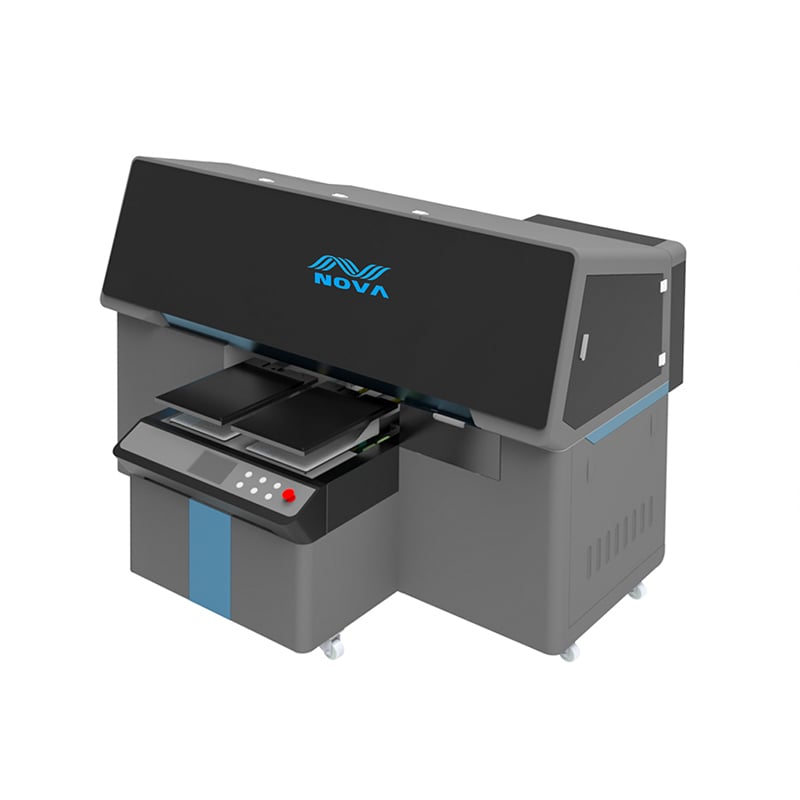
Xiamen Luhua jie Digital Technology Co., Ltd. manufactures UV printing equipment that handles a broad spectrum of these materials, from flat acrylic sheets to cylindrical glass and metal objects. Their cylindrical UV inkjet printers, for instance, incorporate adjustable parameters for ink density, curing intensity, and print speed to accommodate different material requirements. The practical value lies in having the flexibility to dial in the right settings rather than forcing every substrate through the same process.
Table of Contents
- The Short Answer: Almost Anything, With a Catch
- Rigid Substrates: The Straightforward Ones
- Flexible and Textured Materials: Where It Gets Interesting
- Cylindrical and Curved Objects: A Different Ballgame
- The Role of Ink Formulation in Material Compatibility
- Limitations Worth Acknowledging
- Practical Takeaways for Production Planning