 EN
EN
The Curved Surface Challenge That Standard Printers Can't Solve
Printing on a bottle or a cup sounds straightforward until the first test run fails. A flat label applied to a curved surface wrinkles at the edges. A pad printer struggles with consistent ink transfer across varying diameters. Screen printing demands a new screen for every design change. These are not theoretical problems—they show up on production floors every day, eating into time and material budgets.
A cylinder inkjet printer addresses the root issue: cylindrical objects have non-linear surfaces that standard flatbed printers cannot accommodate without distortion. The print head needs to maintain a consistent distance from the substrate as it rotates, and the ink needs to land at the right angle to avoid bleeding or misalignment. This is not about printing faster; it is about printing correctly on the geometry that exists.
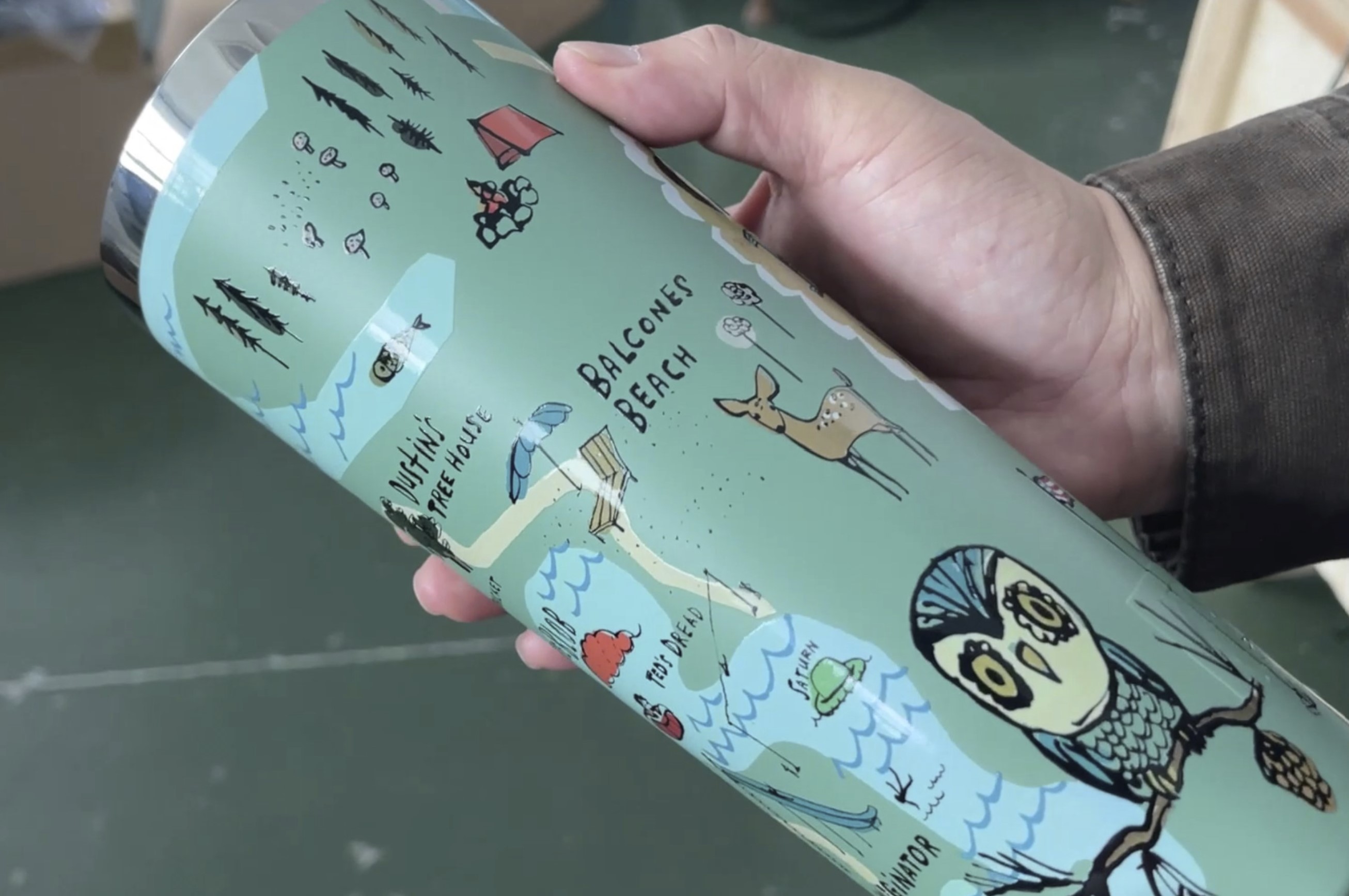
Consider a mid-sized contract packaging operation that took on a promotional order for 50,000 customized stainless steel tumblers. The first attempt used a flatbed printer with a rotary attachment. Registration drifted after every 200 pieces. Reject rates climbed past 12 percent before the job was halted. Switching to a dedicated cylinder inkjet printer brought reject rates down to a manageable range within the first shift. The difference was not in the ink or the operator—it was in the machine's ability to handle the curvature as a design parameter rather than a nuisance.
What a Cylinder Inkjet Printer Does Differently Under the Hood
The technical distinction starts with the rotation mechanism. A cylinder inkjet printer holds the bottle or cup on a spindle that rotates under a stationary print head array. This is fundamentally different from moving the print head across a flat surface. The rotation speed must sync with the firing frequency of the inkjet nozzles to produce continuous, uninterrupted images around the entire circumference.
Most industrial cylinder inkjet printers use piezoelectric print heads that eject droplets measured in picoliters. Droplet size and placement are controlled through waveform shaping—a level of precision that allows for smooth gradients and sharp text even on tapered surfaces like wine bottles or cosmetic vials. The print heads do not touch the substrate, which eliminates the mechanical wear that plagues contact-based methods.
UV curing is integrated directly into the printing process. As soon as the ink lands, UV lamps cure it solid. This instant fixation means the printed design does not shift or smear during rotation, which is a critical requirement when printing on round objects. The curing intensity can be adjusted for different materials—glass requires different UV energy than plastic, and dark substrates may need a white underbase before color printing can proceed.
Material Versatility: From Glass to Plastic to Metal
Bottles and cups come in an array of materials, each with its own surface energy and adhesion characteristics. A cylinder inkjet printer does not care whether the substrate is glass, PET plastic, aluminum, or ceramic—the printing mechanism remains the same. What changes are the ink formulation and the pretreatment steps.
For plastic bottles, surface tension is often the bottleneck. Many plastics have low surface energy, which causes ink to bead up rather than spread evenly. Cylinder inkjet systems can integrate plasma or flame pretreatment units that modify the surface chemistry just before printing. This is not an optional upgrade in many cases; it is the difference between a print that passes a scratch test and one that fails within hours.
Glass presents a different set of variables. It is non-porous and chemically inert, which means ink adhesion depends entirely on the curing process. UV-curable inks formulated for glass form a mechanical bond through cross-linking reactions triggered by UV exposure. The cylinder printer's curing system must deliver consistent UV dose across the entire curved surface—a challenge that requires carefully positioned lamps and reflectors.
Metal containers, such as aluminum bottles or tin cups, sit somewhere in between. They conduct heat, which affects curing dynamics, and they may have protective coatings that interact with ink chemistry. A well-designed cylinder inkjet printer allows for parameter adjustments that accommodate these material-specific behaviors without requiring hardware changes.
The Efficiency Argument That Goes Beyond Speed
Production managers often ask about throughput first. But the real efficiency gain from a cylinder inkjet printer is not about how many pieces per minute it can handle. The gain comes from eliminating the indirect costs associated with traditional decoration methods.
Screen printing for cylindrical objects requires:
A separate screen for each color in the design
Registration setup time that can stretch into hours
Cleanup and storage of screens between runs
Minimum order quantities that make small batches uneconomical
A cylinder inkjet printer bypasses all of these constraints. Design changes are digital—upload a new file and the next piece prints with the new artwork. There are no plates to change, no screens to wash, and no setup waste. For a facility running multiple product variations in a single shift, this flexibility translates directly into reduced downtime and higher effective output.
One contract manufacturer reported that switching from pad printing to cylinder inkjet for a line of promotional cups reduced job changeover time from roughly 45 minutes to under 5 minutes. That is not a speed improvement in the traditional sense—it is a workflow improvement that compounds over every job change.
| Aspect | Traditional Methods (Pad/Screen) | Cylinder Inkjet Printer |
|---|---|---|
| Setup time per job | 30–60 minutes | Under 5 minutes |
| Design change cost | New screen/plate required | Digital file only |
| Color count limitation | One color per screen | Full color in one pass |
| Minimum run viability | High MOQ required | Economical at low volumes |
| Surface adaptability | Limited to specific shapes | Handles varying diameters |
Where Cylinder Inkjet Printers Fall Short (And Why That Matters)
No piece of equipment is perfect for every application, and a cylinder inkjet printer has its limitations. It is not the right choice for extremely high-speed, single-SKU production lines where screen printing's setup cost gets amortized over millions of units. It is also not ideal for substrates that require very thick ink layers for tactile effects, though some systems can build layered prints through multiple passes.
The capital cost is higher than a basic pad printer, and the learning curve for operators is steeper. Ink formulations for UV curing are more expensive than conventional solvent-based inks, and the print heads require regular maintenance to prevent nozzle clogging. These are real considerations that any purchasing decision must weigh.
That said, for operations that run diverse product lines, frequent design updates, or short-to-medium batch sizes, the cylinder inkjet printer's advantages far outweigh its drawbacks. The ability to print variable data—batch codes, QR codes, or sequential numbering—on cylindrical packaging is another capability that traditional methods cannot match economically.
A Practical Example from the Field
A specialty beverage company in the Pacific Northwest was using pre-printed shrink sleeves for its line of craft sodas. The sleeves worked, but inventory management was a nightmare—each flavor needed its own sleeve stock, and minimum order quantities from the sleeve supplier forced the company to hold months of inventory. The warehouse was full of printed sleeves that might or might not sell through before the next seasonal label change.
The company installed a cylinder inkjet printer and switched to blank, unprinted bottles. Now, labels are printed on demand as bottles move through the filling line. Flavor-specific artwork is stored digitally and called up as needed. The warehouse space formerly occupied by sleeve inventory now holds raw bottles—a single SKU that serves all flavors. The change did not increase line speed, but it transformed the economics of the operation by reducing inventory carrying costs and eliminating obsolete sleeve stock.
Why the Equipment Choice Comes Down to the Right Partner
The effectiveness of a cylinder inkjet printer depends not just on the hardware but on the integration of the entire system—pretreatment, printing, curing, and material handling. NOVA Inkjet Technology has built its approach around this systems-level thinking, offering configurations that address the specific demands of bottle and cup decoration without forcing customers into one-size-fits-all solutions. The company's engineering team works with production environments to match printer capabilities to real-world throughput and quality requirements, a distinction that becomes apparent when the machine is running on the factory floor rather than in a showroom.
Table of Contents
- The Curved Surface Challenge That Standard Printers Can't Solve
- What a Cylinder Inkjet Printer Does Differently Under the Hood
- Material Versatility: From Glass to Plastic to Metal
- The Efficiency Argument That Goes Beyond Speed
- Where Cylinder Inkjet Printers Fall Short (And Why That Matters)
- A Practical Example from the Field
- Why the Equipment Choice Comes Down to the Right Partner