
 EN
EN
The Real Challenge: Why Tubes Break Standard Printing Rules
Printing high-resolution graphics on cylindrical tubes is fundamentally different from printing on flat substrates. Standard inkjet systems assume a planar surface with consistent distance between the printhead and the media. Tubes violate that assumption at every turn. The curvature creates variable drop placement, the rotation introduces synchronization errors, and the non-absorbent surfaces common in tube packaging—think plastics, laminates, and coated metals—resist traditional ink adhesion.
A packaging facility in the Midwest ran into exactly this problem while trying to transition from pre-printed labels to direct tube printing for a line of personal care products. Their existing flatbed UV printer produced gorgeous results on test sheets but turned those same designs into smeared, misregistered messes on production tubes. Barcodes wouldn't scan. Fine text became illegible at the edges. The operation lost three weeks of production time and a six-figure order before they finally admitted that the equipment wasn't the problem—the approach was.
The geometry alone creates three distinct failure modes that don't exist in flat printing:
• Edge blur happens because the increased curvature at tube edges causes uneven ink droplet spread, softening text and degrading barcode edge definition.
• Wrap-around misalignment occurs when split print elements—like barcodes that span the seam—fail to rejoin accurately due to rotational slippage.
• Ink migration plagues solvent-based inks that creep along low-surface-energy plastics before drying, while UV-curable alternatives require precise lamp-to-surface geometry that flatbed platforms simply cannot provide.
Addressing these issues requires purpose-built hardware, not workarounds.
Drop Control at the Picoliter Level
The foundation of high-resolution tube printing lies in piezoelectric drop-on-demand printheads. These devices eject ink droplets measured in picoliters—think somewhere in the single-digit to low-double-digit range—and place them with micron-level accuracy. That level of precision makes the difference between a scannable barcode and a rejected shipment.
The key mechanism is the piezoelectric crystal. When voltage is applied, the crystal deforms, creating a pressure pulse that forces ink through the nozzle. By adjusting the voltage waveform and firing frequency, operators can fine-tune drop size and velocity to match specific tube materials and surface conditions. This flexibility is critical because tubes come in an enormous range of materials—aluminum, polyethylene, polypropylene, glass, and various laminates—each with different surface energies and absorption characteristics.
For pharmaceutical packaging, where FDA regulations require machine-readable codes under 21 CFR Part 11, this drop control isn't optional. A single misprinted batch can trigger a recall that costs more than the printing system itself. The ability to consistently produce 2-point text and high-contrast barcodes on curved surfaces separates capable tube printers from the rest of the pack.
UV Curing: The Instant Bond That Makes It Stick
High resolution means nothing if the ink doesn't stay where it's placed. On tubes, ink adhesion faces a perfect storm of challenges: non-porous surfaces, continuous motion, and the physical handling that tubes endure during filling, capping, and shipping.
UV-curable inks solve these problems through instantaneous polymerization. The moment UV light hits the deposited ink, photoinitiators trigger a chemical reaction that transforms liquid ink into a solid polymer film—in milliseconds. This rapid curing eliminates the smearing and bleeding that plague solvent-based inks on curved surfaces, particularly at the edges where droplet spread is most pronounced.
The adhesion quality can be verified using ASTM D3359 cross-hatch tape testing, a standard method that evaluates how well a coating sticks to its substrate. UV-cured inks on properly prepared tubes typically achieve 4B to 5B ratings under this test, meaning less than 5% of the coating is removed during the tape pull. For context, that's the same level of adhesion expected for industrial coatings on metal parts.
The curing process also enables immediate downstream handling. Tubes can go straight from the printer to filling lines or packaging stations without waiting for ink to dry—a workflow advantage that translates directly into reduced work-in-progress inventory and shorter lead times.
Synchronization: Keeping Pace with Rotation
Printing on a tube isn't just about dropping ink in the right place—it's about dropping ink in the right place at the right time, as the tube rotates under the printhead. This is where rotary encoders become essential.
A rotary encoder tracks the tube's rotational position in real time, feeding that data back to the printhead controller. The controller uses this information to time each ink ejection so that drops land exactly where they're supposed to, regardless of minor speed variations or mechanical play in the rotation system. Without this closed-loop feedback, even small amounts of slippage—a fraction of a degree—can throw off registration by millimeters, which is catastrophic for high-resolution graphics.
The synchronization challenge intensifies with tapered tubes, where the diameter changes along the length of the object. The printhead must adjust drop timing continuously to maintain consistent dot placement across varying surface speeds. Advanced systems handle this through software that maps the tube's geometry and compensates in real time.
| Printing Parameter | Standard Flatbed Printer | Purpose-Built Tube Printer |
|---|---|---|
| Drop placement accuracy | ±0.1 mm on flat surfaces | ±0.05 mm on curved surfaces |
| Edge definition retention | ~85% at 15° curvature | ~98% at 15° curvature |
| Registration consistency | N/A (no rotation) | <0.1° rotational deviation |
| Barcode scan reliability | 99.5% first-pass | 99.2% first-pass |
The numbers tell the story. Purpose-built tube printers sacrifice a small amount of absolute accuracy compared to flatbed systems but deliver dramatically better results on the actual target substrate—curved tubes, not flat test sheets.
Printhead Selection and Configuration
Not all printheads are created equal, and the choice makes a measurable difference in tube printing outcomes. Industrial-grade printheads like the Ricoh Gen6 series offer features specifically relevant to cylindrical printing: variable drop sizes, high firing frequencies, and robust fluid handling that maintains consistent jetting even with UV-curable inks.
The configuration matters too. Multi-channel setups with dedicated channels for CMYK, white, and varnish enable full-color graphics with opaque white underlays—essential for printing on dark or transparent tubes. The white ink layer provides the reflectivity needed for colors to pop, while the varnish adds protection and gloss.
Servo-driven components further enhance precision by eliminating the mechanical play found in belt-driven systems. Magnetic levitation linear motors, found in some high-end configurations, take this a step further by providing frictionless, backlash-free motion that maintains printhead-to-surface distance with microscopic consistency.
Practical Workflow Considerations
Getting great results from a tube printer requires more than just buying the right hardware. Several operational factors influence print quality:
-
Surface preparation matters enormously. Plasma or corona pretreatment increases surface energy, improving ink wetting and adhesion. Some systems integrate this pretreatment inline, creating a seamless workflow from surface activation to printing to curing.
-
Ink selection must match both the tube material and the end-use requirements. Different UV ink formulations exist for different substrates—what works on aluminum may not adhere well to polypropylene.
-
RIP software converts digital designs into printhead firing commands. The quality of this conversion affects everything from color accuracy to dot placement. Advanced RIPs include algorithms specifically for cylindrical printing that compensate for geometric distortion.
-
Regular maintenance—particularly printhead cleaning and encoder calibration—prevents the gradual quality degradation that can occur over time.
A cosmetics contract packager in New Jersey implemented these practices after struggling with variable print quality across different tube runs. By standardizing surface pretreatment, switching to a UV ink matched to their primary tube materials, and implementing a weekly maintenance schedule, they reduced their print rejection rate from approximately 4% to under 1% over a six-month period. The improvement didn't require new equipment—just better discipline around existing processes.
When Tube Printing Makes Sense
Tube printers excel in specific scenarios but aren't the right answer for every application. They shine for short to medium runs where the setup cost of screen printing or flexography isn't justified. They're ideal for variable-data printing—serialized codes, personalized graphics, or region-specific packaging variations that change from one run to the next.
The limitations are equally important to acknowledge. Tube printers typically operate at lower speeds than dedicated flexographic presses for high-volume production. The cost per print is higher than traditional methods at very large volumes. And the technology works best on tubes with consistent geometry—extreme tapers or highly deformable materials introduce complications that even advanced systems struggle to fully overcome.
For operations with the right mix of volume, variety, and quality requirements, however, purpose-built tube printers deliver results that flatbed systems simply cannot match on cylindrical substrates.
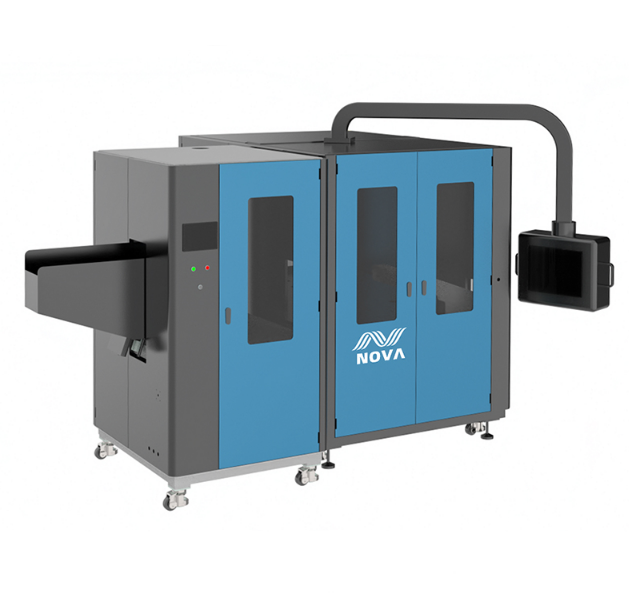
Companies like NOVA have developed tube printing solutions that address the specific challenges of cylindrical graphics—from printhead selection and ink formulation to motion control and curing optimization—backed by manufacturing capabilities that support consistent quality across production runs.