
 EN
EN
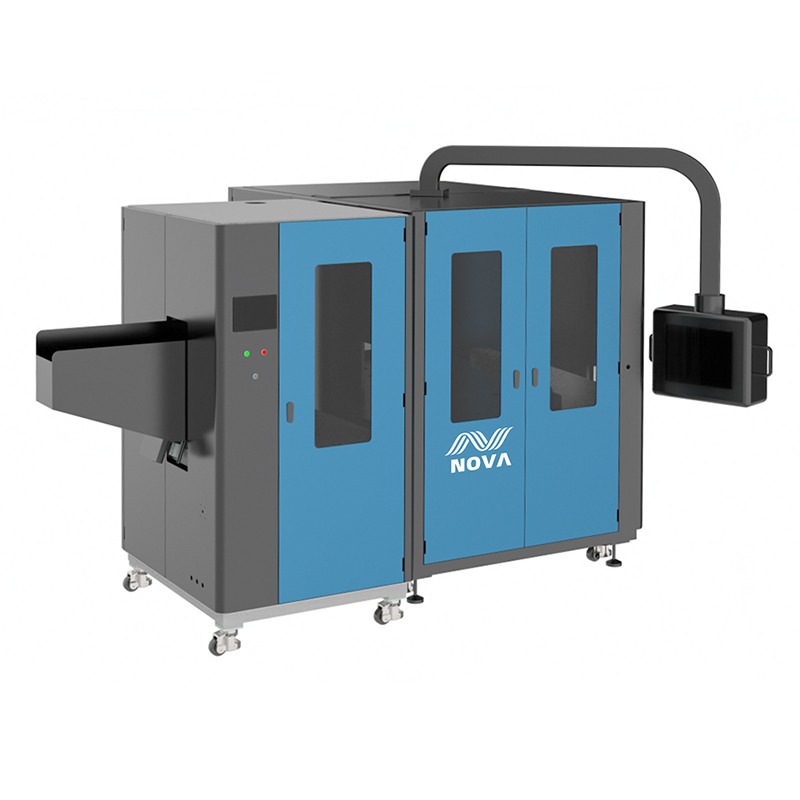
The Geometry Challenge: Why Standard Printers Fail on Tubes
Cylindrical Surface Distortion and Its Impact on Registration & Legibility
Regular flatbed and roll-fed printers just don't work well with tubular materials. The moment someone tries wrapping a flat printed image around a round object, things start going wrong. There's always some kind of geometric distortion that happens, which messes up where important stuff like barcodes, expiration dates, and batch numbers end up on the package. When these labels get misaligned at the seams or when small details get skewed, scanning becomes problematic and regulatory requirements might not be met. What makes matters worse is what happens to the ink during printing. Wet ink tends to run along the curved surface of the tube before it dries properly, making text blurry and graphics look smeared out, particularly when machines are running fast. Standard printing equipment doesn't handle different tube sizes or tapered shapes very well either, so the distortion gets even worse. For companies in the pharmaceutical industry specifically, this whole issue creates major problems. If product codes can't be read clearly, there's a real risk of failing FDA inspections and facing expensive product recalls. That's why regular printers simply aren't suitable for these kinds of packaging needs.
Edge Blur, Wrap-Around Misalignment, and Ink Migration—Key Failure Modes of Non-Specialized Systems
Three interrelated failure modes define the limitations of generic printers on tubes:
- Edge blur: Increased curvature at tube edges causes uneven ink droplet spread, softening text and degrading barcode edge definition.
- Wrap-around misalignment: Split print elements (e.g., barcodes spanning seams) fail to rejoin accurately due to rotational slippage and lack of real-time position feedback.
- Ink migration: Solvent-based inks creep along low-surface-energy plastics before drying; UV-curable alternatives require precise lamp-to-surface geometry—unachievable on flatbed platforms.
Rotary encoders are essential for keeping the printhead synchronized with tube rotation during printing. When there's even a small amount of slippage in this process, it throws off the entire placement accuracy. Flexible plastic tubes make things worse because they stretch and have surfaces that just won't stick properly. Trying to apply standard flat surface printing techniques to these curved, squishy materials ends up hurting both print quality and production speed. This is why regular inkjet systems simply can't handle the job. Only specialized tube printing equipment built specifically for these challenges works reliably in real world conditions.
How Tubes Inkjet Printers Deliver Precision: Core Technologies Explained
Tubes inkjet printers overcome cylindrical printing challenges through two integrated, purpose-engineered innovations: precise drop control and real-time motion synchronization.
Piezoelectric DOD Printheads: Superior Drop Control for Fine Text and Barcodes
Piezoelectric DOD printheads can shoot out ink in tiny amounts down to 3 picoliters while placing each drop with incredible accuracy at the micron level. What this means is no more annoying satellite drops or messy splatters, so we get clean 2pt text and scannable barcodes that work even when printed on those constantly moving production line tubes. By adjusting voltage settings and tweaking frequencies, operators manage to position dots within about 0.1mm tolerance. This kind of precision isn't just good for print quality it actually meets those strict FDA regulations under 21 CFR Part 11 regarding how readable pharmaceutical batch codes need to be.
UV-Curable Inks + Rotary Encoder Sync: Ensuring Adhesion, Speed, and Zero-Slip Accuracy
The UV curable inks we're talking about here basically harden right away when exposed to those specific LED lights operating between 395 and 405 nanometers. They stick really well too, getting over 95% adhesion on materials like aluminum surfaces, laminated foils, and even high density polyethylene without any smearing issues. What makes this whole setup work so smoothly is the integration with rotary encoders that monitor where each tube is positioned at an impressive rate of 1,000 times per second. The printer then fine tunes itself automatically whenever there's slight slippage happening or if the tube diameters vary just a bit during production runs. And all this coordination allows for consistent printing performance at remarkable speeds - over 300 tubes can be processed every single minute while maintaining pinpoint accuracy within plus or minus 0.3 millimeters throughout the entire operation.
Proven Applications Across Industries Using Tubes Inkjet Printers
Pharma: FDA-Compliant Batch/Lot Coding on Aluminum & Laminated Tubes at 300 ppm
The Tubes inkjet printer system provides reliable coding solutions for tricky pharmaceutical materials such as those aluminum squeeze tubes and complex multi layer laminates that manufacturers struggle with. These machines use piezoelectric drop on demand printheads paired with special UV curable inks to create markings that last through all sorts of processing steps. What makes them stand out is their ability to withstand gamma irradiation and maintain clarity during cold chain transportation conditions. Running continuously at around 300 parts per minute, these printers satisfy the strict requirements of FDA regulation 21 CFR Part 11 regarding audit trails. And importantly, they eliminate the problem of illegible codes which according to recent studies from PharmaTech Journal account for about 8 percent of all packaging related drug rejection cases.
Cosmetics & Personal Care: High-Gloss, Smudge-Proof Branding on Flexible Plastic Tubes
Premium cosmetic brands are seeing amazing results from these printing systems which create realistic, glossy branding on those flexible PE and PETG tubes without any smearing or warping issues. The systems use synchronized rotary encoders to keep images clear even when running at different speeds or dealing with tube movement during production. Special UV inks have been developed for this purpose too they resist scratches, stay stable in cold storage conditions, and produce rich color transitions. According to recent industry data from Beauty Packaging Report 2024, companies using this technology experience around 40 percent fewer product returns because of packaging problems compared to older pad printing methods. Plus there's better consistency in reproducing detailed multilingual labels and tiny logo elements down to sub 4 point size.
FAQ Section
Why do standard printers fail on tubes?
Standard printers fail on tubes due to geometric distortion, edge blur, and ink migration problems. These lead to misalignment and unreadable codes that are essential in pharmaceuticals and other industries.
What are piezoelectric DOD printheads used for?
Piezoelectric DOD printheads are used for precise drop control, allowing fine text and barcodes to be printed accurately with tiny ink droplets.
How do UV-cured inks work in tube printing?
UV-cured inks harden immediately under specific LED lights, providing excellent adhesion and maintaining clarity at high speeds with zero slippage accuracy.