
 EN
EN
The Shift from Analog to Digital in Wood Finishing
For decades, custom furniture makers relied on veneers, laminates, and analog screen printing to add patterns and graphics to wood surfaces. Each method came with tradeoffs—setup costs, material waste, and limitations on design complexity. Direct digital printing on wood changes that calculus entirely. Instead of pressing a pre-made film onto a panel or screening ink through a mesh, modern inkjet systems deposit droplets directly onto the substrate. The result is a finishing process that opens up possibilities previously reserved for high-end, low-volume production.
A 2024 market analysis placed the global digital printing on wood market at roughly $1.2 billion, with projections reaching $2.5 billion by 2031 at a compound annual growth rate of around 8%. That trajectory reflects a broader recognition: direct printing isn't just a novelty for showrooms—it's becoming a production-grade tool for manufacturers who need to respond faster to shifting consumer preferences.
Eliminating the Middleman in Surface Decoration
The most immediate benefit of direct printing on wood is the removal of intermediate steps. Traditional decorative processes often require creating a physical carrier—a printed film, a screened mesh, or an engraved roller—before any ink touches the wood. Each carrier adds cost, lead time, and a point of failure. With direct inkjet printing, a digital file goes straight to the printhead. That means a furniture maker can move from design approval to first article in hours rather than days.
This workflow compression matters most in custom furniture, where batch sizes are small and design iterations are frequent. One shop that shifted to direct printing reported cutting setup-related material waste by a noticeable margin—not because the ink itself was cheaper, but because there were no more misaligned films or contaminated screens to throw away. The savings came from what didn't get consumed during changeovers.
Design Freedom That Goes Beyond the Surface
Wood has grain, knots, and natural texture. Historically, these characteristics were either hidden under opaque finishes or worked around with careful placement of printed elements. Direct printing doesn't require hiding the wood—it can work with it.
Modern UV inkjet systems can print at resolutions that preserve fine detail while allowing the substrate's natural characteristics to show through. Translucent inks and variable droplet sizes make it possible to create effects that range from a subtle tint that enhances the grain to full-color photographic imagery that sits on top of it. This isn't just about decoration; it's about expanding the design vocabulary available to furniture designers.
Consider a kitchen cabinet door. With direct printing, a designer can specify a gradient that fades from a solid color at the bottom to a transparent stain at the top, letting the wood grain emerge gradually. That same door could carry a repeating geometric pattern that aligns precisely with the panel's edges—something that would require multiple screens and careful registration in an analog process. The digital workflow makes these options accessible without exponential cost increases.
Shorter Runs, Lower Risk, Faster Turnaround
Custom furniture is, by definition, not mass-produced. Batch sizes might range from a single piece to a few dozen. Traditional decoration methods that rely on tooling or setup-intensive processes become economically unattractive at these volumes. Direct printing flips that equation.
Because there's no physical tooling to create, the cost per unit for a short run is essentially the same as for a longer one—ink and machine time dominate the variable cost. This changes the risk profile for custom shops. A designer can offer five different finish options for a table series without committing to five sets of screens or five rolls of printed film. If one option doesn't sell, there's no sunk cost in physical tooling.
One furniture manufacturer that introduced direct printing for its made-to-order line found that the average time from order to shipment dropped by a meaningful amount—not because the printing itself was faster, but because the elimination of external prepress steps collapsed the overall lead time. Customers could see digital proofs and approve them the same day, something that wasn't feasible when each finish required a separate physical sample.
Sustainability Gains Through Waste Reduction
The environmental conversation around furniture manufacturing often focuses on wood sourcing and chemical finishes. Printing adds another dimension. Traditional decorative processes generate waste at multiple points: off-spec printed films, cleaning solvents for screens, and the energy required to cure or dry heavy ink layers.
Direct UV inkjet printing reduces several of these waste streams. Ink is deposited only where needed—no flood coating, no excess that gets washed off. UV curing consumes energy only during the printing pass, rather than maintaining heated drying tunnels. And because digital files eliminate the need for physical inventory of decorative materials, there's no obsolete stock to discard when a design changes.
Research published in 2025 highlighted the potential for UV inkjet printing to contribute to more sustainable and customizable surface decoration techniques, particularly as consumer demand grows for personalized furniture with lower environmental footprints. The reduction in energy consumption and material waste isn't just a talking point—it translates into measurable operational benefits for shops that track these metrics.
| Aspect | Traditional Decoration (Film/Screen) | Direct Inkjet Printing |
|---|---|---|
| Setup waste per run | Moderate to high (films, screens) | Minimal (digital file only) |
| Design change cost | High (new tooling) | Low (file update) |
| Minimum run for viability | Often 50+ units | 1 unit upward |
| Substrate interaction | Limited (opaque coverage typical) | High (translucent options, grain show-through) |
| Inventory of decorative materials | Required | Not required |
When Direct Printing Makes Sense—and When It Doesn't
Direct printing on wood isn't a universal replacement for every finishing method. For high-volume production of identical panels—think thousands of cabinet doors with the same solid color—traditional spray finishing or film lamination remains cost-effective. The digital process shines where variability and short runs are the norm.
Surface preparation also matters. Wood that's too rough or uneven will affect print quality, regardless of the printing technology. A smooth, sealed surface produces the best results. Some manufacturers have found that a light sanding and a clear primer coat are sufficient; others have integrated inline sanding and cleaning stations ahead of the printhead. The right approach depends on the specific wood species and the desired finish.
There's also the question of durability. UV-cured inks form a hard, scratch-resistant film that performs well on furniture surfaces. But for pieces that see heavy abrasion—tabletops in commercial settings, for example—an additional clear coat over the printed image may still be necessary. Direct printing doesn't eliminate the need for protective finishes; it changes where and how they're applied.
A practical observation from a mid-sized furniture shop in the Pacific Northwest: the team found that printing directly on maple and alder produced consistently good results, while oak's open grain required an extra filler step to avoid visible texture interference. The shop adjusted its workflow accordingly, reserving direct printing for species and designs where the grain interaction was an asset rather than a liability.
The Bottom Line for Custom Furniture Production
Direct printing on wood delivers tangible benefits where custom furniture makers feel the most pressure: design flexibility, lead time compression, and waste reduction. It doesn't replace every traditional method, but it expands the range of what's economically feasible for short-run, high-variation work. The technology is mature enough that the question is no longer whether it works, but how to integrate it effectively into existing workflows.
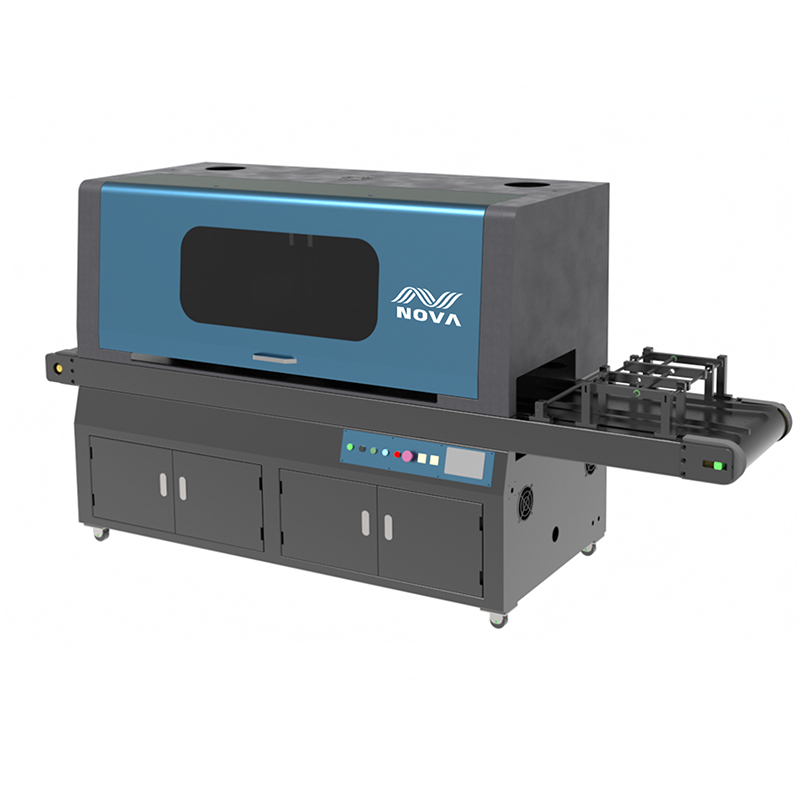
Companies like NOVA Inkjet Technology have developed printing systems that address the specific requirements of wood substrates, with adjustable fixtures and ink formulations that balance adhesion with visual clarity. Their approach reflects a broader trend in industrial inkjet: moving from general-purpose machines to purpose-built solutions that understand the material they're printing on.
Table of Contents
- The Shift from Analog to Digital in Wood Finishing
- Eliminating the Middleman in Surface Decoration
- Design Freedom That Goes Beyond the Surface
- Shorter Runs, Lower Risk, Faster Turnaround
- Sustainability Gains Through Waste Reduction
- When Direct Printing Makes Sense—and When It Doesn't
- The Bottom Line for Custom Furniture Production