 EN
EN
How Camera Vision Enables Real-Time Alignment and Automatic Error Correction
Synchronizing optical feedback with piezoelectric printhead control
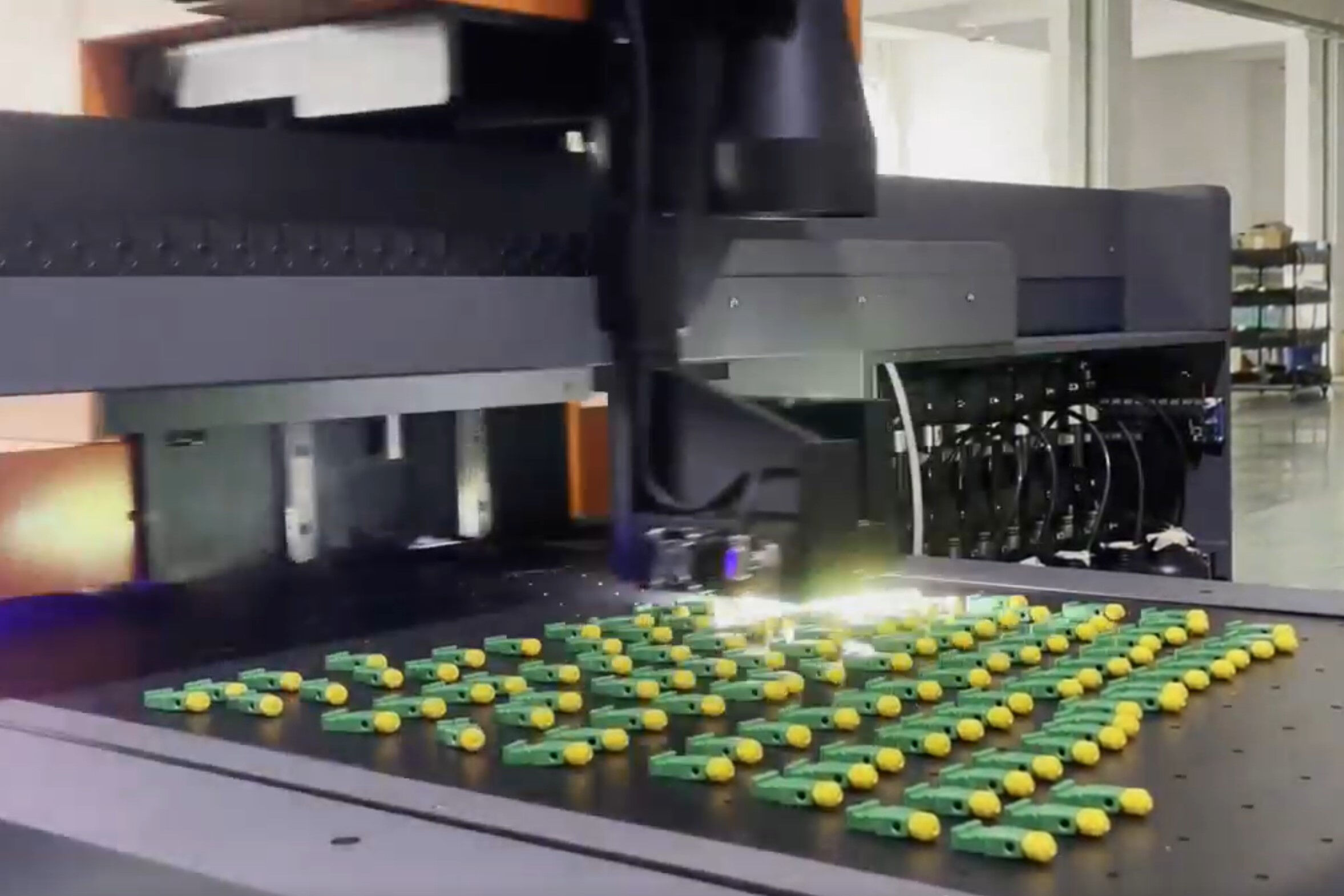
Today's flatbed inkjet printers come equipped with built-in camera systems that deliver incredible precision down to the micron level thanks to their closed loop control design. The high speed cameras run at least 500 frames per second and keep track of where the material sits throughout the printing process. They send this visual information to processing software which can spot when things start going off track in as little as three milliseconds. When these small errors happen, the system quickly sends correction commands to the piezoelectric print heads so they adjust exactly where each tiny drop lands right there during operation. At the same time, something called dynamic Z axis compensation helps deal with any warping issues. This feature creates detailed maps of the surface texture with laser technology that measures details as fine as fifty micrometers apart.
This tightly synchronized feedback loop maintains ±0.1 mm registration accuracy across multi-layer prints—even amid thermal expansion, media drift, or dimensional shifts common in industrial environments.
Case study: 98.7% alignment accuracy in automotive trim printing
One top industrial flatbed printer managed around 98.7% alignment accuracy on first pass when printing over 15,000 curved car interior parts, all without needing any physical jigs or registration marks. The system's AI edge detection basically cut out those tedious manual setup steps we used to have, and its multi point height mapping could compensate for substrate deformations as much as plus or minus 2.5 mm. Material waste due to misalignment went down about 47% overall, which is pretty impressive considering how materials can behave inconsistently. What makes this really stand out though is that positional tolerances stayed within just 0.15 mm throughout production runs. This breakthrough allows direct digital printing on complex shapes that were once only possible with traditional screen printing methods.
Beyond Registration Marks: Markerless Vision-Guided Positioning for Flexible Substrates
Flatbed inkjet printers now come with built-in vision systems that basically do away with those pesky physical registration marks and manual jigs. These smart systems can spot where substrates end and what's on their surfaces without any help from humans. They work by using something called convolutional neural networks, or CNNs for short. With these networks, the printers pick up on all sorts of natural reference points such as edges, different textures, even tiny details at an impressive 5 micrometer resolution. What's really cool is how they adjust themselves automatically when dealing with materials that have different levels of opacity, reflect light differently, or just bend and flex. The markerless printing method opens up possibilities for working directly on tricky stuff like leather hides, silicone sheets, and those complicated curved composite parts that used to be real headaches. According to a recent study by Keypoint Intelligence from last year, manufacturers who switched to this technology saw their job setup time drop by around 73%, plus there were 15% fewer registration errors overall. That kind of improvement makes a big difference in production efficiency.
Compensating for substrate warping via multi-point height mapping and dynamic Z-axis adjustment
For warped or uneven substrates—such as aerospace composites or molded automotive panels—the system generates high-fidelity 3D topography maps using laser triangulation. This spatial data drives coordinated adjustments across three critical parameters:
| Adjustment Parameter | Function | Tolerance |
|---|---|---|
| Printhead Z-height | Maintains optimal drop distance for consistent dot formation | ±0.1 mm |
| Ink droplet timing | Compensates for surface angles to preserve placement fidelity | <50 μs variance |
| UV curing intensity | Modulates energy delivery to ensure uniform adhesion across contours | 10% power modulation |
By synchronizing height mapping with piezoelectric nozzle control, printers sustain reliable ink laydown even on substrates exhibiting up to 3 mm of warp—addressing a core challenge in high-value manufacturing where dimensional stability fluctuates across production runs.
Precision Printing on Irregular and Small Objects: Solving Real-World Registration Challenges
Balancing High-Resolution Imaging with Low-Latency Processing for Micro-Part Alignment
Getting accurate registration on tiny or complicated parts like those used in medical devices, micro electronics, or aerospace components is no small task. It basically means balancing super sharp imaging capabilities with incredibly fast response times. That's where modern flatbed inkjet printers come into play. These machines have specially designed optical systems that can pick out details as small as 25 microns. They also run on processing systems that cut down delays significantly. What happens during printing? The system actually scans the edges and surfaces of each part while it's being printed, then makes split second adjustments to the piezoelectric nozzles right there in the middle of the print job. According to what manufacturers are seeing across the industry, these automated systems result in around 92 percent fewer alignment problems than when people try to do it manually.
Critical enablers include:
- Sub-millisecond latency tolerance to align imaging feedback precisely with printhead motion
- Adaptive algorithms that normalize for reflectivity variations across metals, transparent polymers, and matte finishes
- Multi-angle illumination that eliminates shadows in recessed or under-cut geometries
The result is accelerated changeovers, elimination of physical jigs and registration marks, and sustained ±0.1 mm positional accuracy—even across serialized batches of small, curved, or asymmetric components.
FAQs about Camera Vision in Inkjet Printing
What advantages do camera vision systems offer in flatbed inkjet printers?
Camera vision systems provide precision in image alignment and error correction, resulting in minimal material waste and increased efficiency, especially on complex substrates.
How do these systems replace traditional registration marks?
Using convolutional neural networks, these systems identify natural reference points such as edges and textures, negating the need for traditional physical registration marks.
Can inkjet printers handle warping or uneven surfaces?
Yes, through multi-point height mapping and dynamic Z-axis adjustment, these printers can compensate for uneven substrates, maintaining consistent print quality.
What industries benefit most from these advancements?
Industries like automotive, aerospace, and medical devices, which deal with complex shapes and high precision demands, substantially benefit from these technologies.
Table of Contents
- How Camera Vision Enables Real-Time Alignment and Automatic Error Correction
- Beyond Registration Marks: Markerless Vision-Guided Positioning for Flexible Substrates
- Precision Printing on Irregular and Small Objects: Solving Real-World Registration Challenges
- FAQs about Camera Vision in Inkjet Printing