
 EN
EN
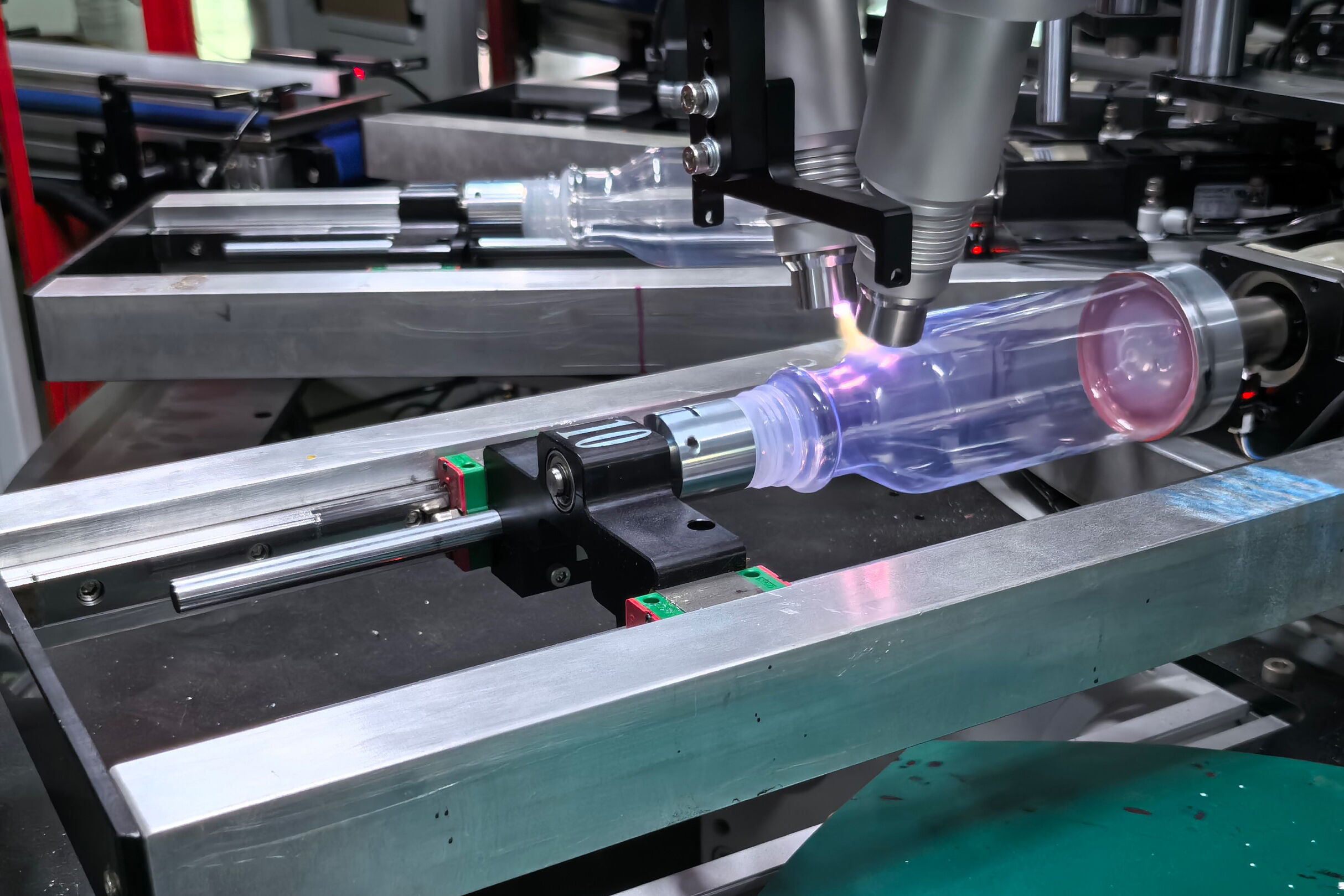
How One-Pass Rotary Architecture Enables Breakthrough Speed and Precision
Synchronized rotation, linear motion, and fixed-array printhead mechanics
One-pass rotary inkjet printers achieve industrial-grade efficiency through harmonized mechanical integration. The system combines three core elements:
- A rotating cylinder advancing substrates linearly
- Stationary full-width printhead arrays
- Precision drop-on-demand ink deposition
When everything works together as one unit, there's no need for printheads to move back and forth across the material, which cuts down on production time by about two thirds when compared to those old multi pass systems. With this fixed array setup, we're able to apply ink accurately within just a tenth of a millimeter even as fabrics keep moving continuously through the machine. That kind of precision explains why our textile tests have shown almost perfect results right from the start, hitting close to 98 percent success rate on the very first run. The constant motion also means fewer problems with misalignment that plague machines that keep stopping and starting. Plus, since components don't have to backtrack mechanically anymore, they last around thirty percent longer before needing replacement. According to some recent testing done last year, manufacturers saw their daily output jump by forty percent, going from eight thousand to over eleven thousand linear meters produced each day. And changing colors between batches happened eighty six percent quicker than with conventional equipment.
Achieving up to 120 m/min without registration drift: resolving the speed–accuracy paradox
Advanced closed-loop control systems enable one-pass rotary printers to reach unprecedented speeds while maintaining micron-level precision. Real-time substrate tracking sensors make microsecond adjustments to droplet placement, counteracting material stretch and environmental variables. This resolves the historical trade-off where:
| Performance Metric | Traditional Systems | One-Pass Rotary | Improvement |
|---|---|---|---|
| Maximum Speed | 15–22 m/min | 120 m/min | 5.5× faster |
| Registration Tolerance | ±0.3 mm | ±0.1 mm | 67% tighter |
| Defect Rate | 3.2% | 0.9% | 72% reduction |
The continuous rotary motion prevents deceleration-induced drift, while adaptive UV curing maintains edge definition at full velocity. Manufacturers report near-zero print rejection for complex patterns—achieving 34% less material waste than rotary screen printing. These capabilities deliver measurable ROI through 32% energy savings and 65% reduced labor requirements in on-demand production environments.
Visual Positioning UV Inkjet Printer: Real-Time Registration Control at Sub-50µm Tolerance
How integrated vision systems enable dynamic substrate tracking and closed-loop correction
Cameras with high resolution can scan materials at over 120 frames per second, picking up tiny distortions and position changes while printing happens fast. These cameras send information back to motion controllers that tweak where the printheads go in real time, fixing issues like when materials stretch, heat causes warping, or machines drift off course. The vision systems map out surface details down to about 5 microns accuracy, so there's no need for manual registration anymore. This cuts down alignment mistakes by around 90% compared to old mechanical systems according to research from Print Tech Institute last year. With this kind of system constantly checking digital blueprints against actual printed surfaces, it becomes possible to print perfectly even on rough textures or odd shaped objects without problems.
Maintaining color fidelity and edge sharpness under high-speed UV curing conditions
When working with rapid UV polymerization, there are some real headaches to deal with. The ink tends to spread out too much if not controlled properly, leading to those annoying edge bleeds we all hate. And then there's the issue of heat buildup which can completely mess with colors, creating unexpected chromatic shifts. Modern printing systems tackle these problems head on by carefully timing when ink gets deposited and how it gets cured. These machines work with variable droplet sizes ranging from just 6 to 42 picoliters, allowing them to keep those sharp edges intact even at impressive speeds of 75 square meters per hour. Meanwhile, special sensors constantly check color consistency right in the middle of printing operations. Temperature control is another big concern too. The lamps adjust their intensity dynamically so nothing gets hotter than 40 degrees Celsius. Why does that matter? Well, PVC starts expanding around 2.3% at that temperature mark, which could ruin everything. Throw in the ability to apply both matte and gloss ink layers during a single pass, and suddenly we're looking at about 94% Pantone color accuracy even on tricky dark composite materials. That kind of precision makes a world of difference in production quality.
End-to-End Automation: From Job Setup to Finished Roll with Zero Manual Intervention
Full automation is changing how industrial printing works, allowing factories to run from start to finish without needing anyone on site during operation. When it comes to UV inkjet machines that can see where they need to print, smart control systems handle everything from feeding materials into the machine, adjusting the print heads, delivering just the right amount of ink, and checking if what gets printed looks good enough. These systems cut out all those time consuming tasks like switching plates manually, tweaking colors until they match, and making sure everything lines up correctly. Even better? They keep things aligned within about half a hair's width (that's around 50 micrometers) while running at blistering speeds over 100 meters per minute. The whole process acts like a self-correcting loop that spots problems as they happen. Most of the time it just fixes issues automatically, but when something really bad happens, it knows to stop production so nobody wastes material. Factories using this tech report very few rejected prints now, and many run their presses nonstop day after day with hardly anyone watching over them anymore.
Key operational transformations include:
- Job setup automation: AI interprets design files to auto-configure print parameters, substrate profiles, and curing requirements
- Self-monitoring production: Embedded sensors track ink viscosity, nozzle health, and UV lamp intensity with predictive maintenance alerts
- Intelligent roll handling: Automated winding and labeling systems apply batch-specific identifiers while detecting substrate defects
- Closed-loop waste reduction: Machine learning algorithms optimize material usage by analyzing rejection patterns across jobs
Tangible Business Impact: ROI, Scalability, and Waste Reduction in On-Demand Production
Quantified Gains: 65% Labor Reduction, 32% Lower Energy Use vs. Multi-Pass, Near-Zero Print Rejection
When industrial printers switch to visual positioning UV inkjet tech, they start seeing real improvements in how things run day to day. The biggest change comes from getting rid of those old multi-pass processes. Factories report cutting down on staff needs by around two thirds once they automate these tasks better and get everything synced up properly. Energy bills take quite a hit too, dropping roughly a third when compared to traditional methods because single pass printing means less moving parts around and shorter UV curing times. Getting prints aligned within just under 50 microns makes mistakes almost nonexistent. That matters a lot for businesses doing custom orders since every wasted sheet eats into profit margins.
| Benefit | Metric | Operational Impact |
|---|---|---|
| Labor Efficiency | 65% reduction | Reduced manual oversight and rework |
| Energy Consumption | 32% savings vs. multi-pass | Lower operational costs and carbon footprint |
| Material Waste | Near-zero rejection | Higher yield from raw material inputs |
This efficiency reshapes production economics. Businesses scale output without proportional cost increases. On-demand runs become profitable at lower volumes, enabling customized short batches previously deemed uneconomical. The combination of lowered waste, energy, and labor inputs delivers a quantifiable ROI within 12–18 months for most operations.
Frequently Asked Questions
What is the main advantage of one-pass rotary architecture in inkjet printers?
The main advantage is the significant reduction in production time and misalignment issues, resulting in improved efficiency and precision.
How do vision systems improve the printing process?
Vision systems enable real-time monitoring and correction of substrate positioning issues, greatly reducing alignment errors and ensuring high-quality prints.
Why is temperature control important in UV inkjet printing?
Temperature control prevents material expansion and color shifts, maintaining print quality and precision during rapid UV curing processes.
What impact does automation have on industrial printing?
Automation enhances efficiency by reducing manual intervention, ensuring accurate print application, and minimizing waste, leading to significant operational savings.
Table of Contents
- How One-Pass Rotary Architecture Enables Breakthrough Speed and Precision
- Visual Positioning UV Inkjet Printer: Real-Time Registration Control at Sub-50µm Tolerance
- End-to-End Automation: From Job Setup to Finished Roll with Zero Manual Intervention
- Tangible Business Impact: ROI, Scalability, and Waste Reduction in On-Demand Production
- Frequently Asked Questions