 EN
EN
How Glass Bottle Rotary Screen Printers Solve Curved-Surface Printing Challenges
Distortion, Registration Drift, and Ink Flow Instability on Cylindrical Glass
When trying to print on curved glass surfaces, manufacturers face several connected headaches. First there's the shape itself - those cylindrical contours cause all sorts of geometric distortions. Then comes registration drift when running at high speeds, making everything look off alignment. And let's not forget about the ink flow issues that just won't stay consistent. Glass bottles actually warp the screen mesh when they touch it in regular setups, which leads to blurry edges and messed up designs. The ink thickness is another pain point. If it's too runny, it drips everywhere. Too thick? It ends up clogging the screens completely. All these problems happen because glass has this non-porous silica surface that pushes away normal inks while pulling in static dust particles like magnets. According to industry numbers, mistakes in curved surface printing create around 23% of all packaging waste in glass manufacturing. That's why many companies are turning to specially designed rotary systems instead of their old methods.
Synchronized Rotation, Precision Mandrel Clamping, and Dynamic Mesh Tension Control
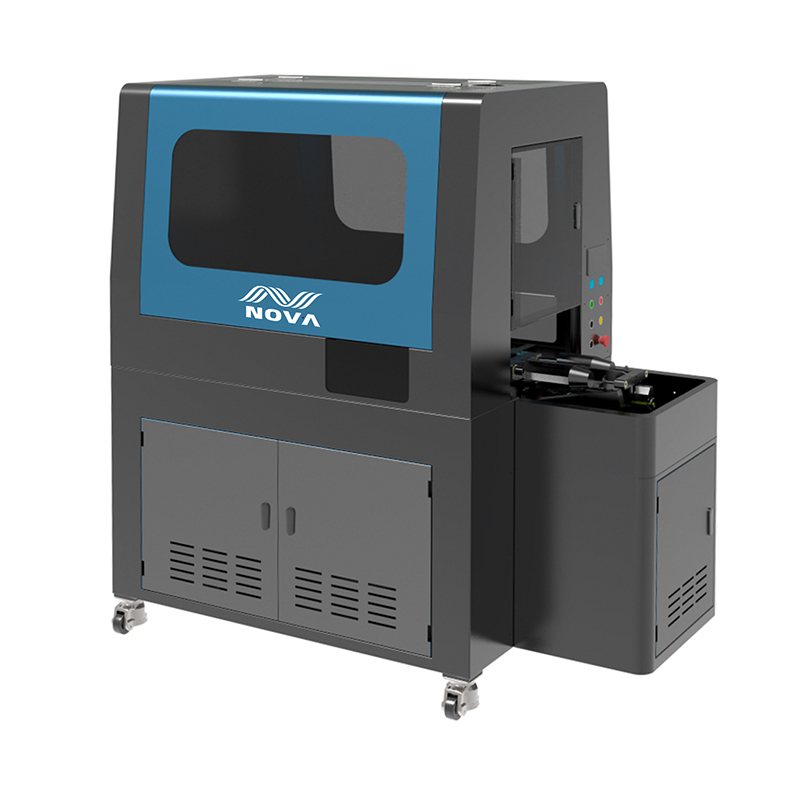
Glass bottle rotary screen printers tackle these common printing challenges by combining three key technologies. The printer rotates in sync with the bottle movement, keeping things aligned so there's no smearing during the process. Containers are held securely thanks to precision mandrel clamping systems that apply just the right amount of pressure between 5 to 15 psi. This prevents any slippage while still working with slight variations in container size. Another important feature is dynamic mesh tension control. Servo motors actually adjust how tight the screen stays during printing, which helps counteract stresses caused by curved surfaces. All these features work together to get consistent ink application across the entire surface. This matters a lot when printing metallic colors or opaque white inks that need complete coverage. The system also includes closed loop feedback that keeps track of environmental factors like humidity levels. Based on what it detects, the machine makes automatic adjustments to squeegee pressure, maintaining good print quality even when running at high speeds over 500 bottles per hour.
Real-World Validation: 99.2% First-Pass Registration Accuracy (Leading Manufacturer, 2023)
One leading glass packaging company hit an impressive 99.2% first pass registration accuracy on about 2 million units once they started using those fancy rotary screen printers. They checked everything with automated optical inspection systems too. Getting this kind of alignment right the first time cut down their rework expenses by around $740,000 each year according to some research from Ponemon back in 2023. What really helped them out were these zero stitching workflows that basically got rid of all those annoying seam problems. Plus, they had these super stable thermal frames maintaining plus or minus 0.1mm precision throughout production runs. And let's not forget the quick drying UV inks that stopped any shifting after application. Manufacturers working at scale now find this tech absolutely essential, especially in industries like pharmaceuticals and premium drinks where clear labeling matters a lot, brands need to look consistent every single time, and meeting regulations isn't just nice but mandatory.
Glass-Specific Ink Systems and Curing for Optimal Adhesion and Optical Clarity
Why Standard Inks Fail on Silica-Rich Glass Surfaces
Regular inks just don't stick to plain old glass because of how smooth and chemically inactive the silica surface is. Glass has this really slick molecular arrangement that makes it hard for anything to grab onto mechanically. Plus there are these hydroxyl groups sitting around creating what amounts to a slippery film that pushes away most organic binding agents. When standard printing happens anyway, we end up seeing problems like ink forming beads instead of spreading out properly, layers peeling off when heated later on, and colors looking washed out or not opaque enough. Testing shows that regular acrylics and solvent based inks typically score between 2 and 3B on the crosshatch test according to ASTM D3359 standards. That's way short of the 5B mark needed if we want printed glass packages to actually last through normal handling and storage conditions.
UV-Curable Acrylate Resins vs. Ceramic-Frit Inks: Bonding, Thermal Expansion, and Cure Profiles
Specialized glass bottle rotary screen printers require inks engineered for substrate compatibility. Critical distinctions between leading systems include:
| Property | UV-Curable Acrylate Resins | Ceramic-Frit Inks |
|---|---|---|
| Bonding Mechanism | Free-radical polymerization | Silicate fusion (500-600°C) |
| CTE Match to Glass | 8.5 ppm/°C (soda-lime compatible) | 9.0 ppm/°C (borosilicate focus) |
| Cure Process | 3-5 sec UV exposure (LED/Hg vapor) | 30-min kiln sintering |
UV-curable acrylates deliver instant curing for precise registration and superior optical clarity¬making them the choice for 85% of pharmaceutical packaging applications (Food Packaging Journal, 2023). Ceramic-frit inks form permanent mineral bonds ideal for pasteurization-resistant beverage containers but demand tight thermal control to avoid bottle deformation.
Critical Pre-Printing Preparation for Reliable Glass Bottle Rotary Screen Printer Performance
Microcontamination, Static Dust Attraction, and Their Impact on Ink Transfer
Tiny bits of dirt and static electricity sticking things together are big problems when trying to get ink to transfer properly. Glass surfaces full of silica tend to grab onto tiny airborne particles measuring around 0.3 microns in size, which is about 1/200th what a single strand of hair would be wide. These little invaders create all sorts of issues on press runs. We see pinhole defects where the mesh just can't make proper contact, plus the ink ends up laying down inconsistently because the surface isn't smooth enough. Bottles that haven't been treated properly show failure rates as high as 23% for ink adhesion. This leads to expensive rework that throws off production schedules. Modern printing lines run at incredible speeds, sometimes over 10,000 units an hour, so even minor disruptions cost manufacturers thousands.
Plasma Pretreatment, Ionized Air Cleaning, and Vacuum Mandrel Sealing Workflow
The preparation process has three main steps that eliminate contamination concerns prior to starting the printing operation. Step one involves treating surfaces with atmospheric plasma which boosts surface energy levels somewhere between 70 and 100 dynes per centimeter. This creates those necessary bonding points at the molecular level while also getting rid of any organic residue left behind. For step two, we use ionized air knives to zap away static electricity, bringing down residual voltage below half a kilovolt. At the same time, these devices blow away loose particles through a steady stream of clean air filtered by HEPA systems. The third part of the process relies on vacuum sealed mandrels that hold things in place with suction pressure ranging from about 0.8 to 1.2 bars. This keeps everything dust free even when rotating components are involved. We've tested this whole system extensively across several ISO 9001 certified bottling plants, and what we found is pretty remarkable: our first pass print success rate jumps all the way up to nearly 99.4%. That's because there's simply less variation happening before the actual printing takes place.
FAQ
What are the main challenges in curved-surface printing on glass bottles?
Curved-surface printing on glass bottles faces challenges such as geometric distortion, registration drift, ink flow inconsistencies, and static dust attraction.
Why are rotary screen printers preferred for printing on glass bottles?
Rotary screen printers offer synchronized rotation, precision mandrel clamping, dynamic mesh tension control, and real-time feedback systems for improved accuracy, stability, and ink consistency.
What types of inks are ideal for printing on silica-rich glass surfaces?
UV-curable acrylate resins and ceramic-frit inks are ideal due to their bonding mechanisms and compatibility with glass surfaces.
What preprinting steps are required for effective glass bottle printing?
Effective preprinting preparation involves plasma pretreatment, ionized air cleaning, and vacuum mandrel sealing to minimize contamination and ensure reliable ink transfer.