
 EN
EN
The Visual Impact That Drives Purchase Decisions
Packaging is the first physical interaction a consumer has with a product. Before the fragrance is smelled, the beverage tasted, or the device handled, the package communicates—through color, texture, and finish. Among the finishing techniques available to packaging designers, hot stamping occupies a unique position. It doesn't just add color; it adds a metallic or pigmented foil that catches light and creates a tactile impression of quality.
The effect is measurable. Research in consumer behavior has consistently shown that packaging with metallic or embossed elements is perceived as higher value than identical packaging without these features. A small amount of foil on a label or package can be enough to catch a consumer's eye and provide an edge over a competing product on the shelf. Rotary hot stamping makes this effect practical for production environments where speed and consistency matter as much as visual impact.
How Rotary Hot Stamping Differs from Flatbed
Traditional hot stamping uses a flat die that presses heated foil onto the substrate in a stamping motion—down, hold, up. This works well for flat surfaces and low volumes. For cylindrical or curved packaging, or for high-speed production lines, a rotary approach offers clear advantages.
In rotary hot stamping, the die is mounted on a rotating cylinder. The substrate passes between this cylinder and a counter-pressure roller. As the die cylinder rotates, it transfers the heated foil onto the moving substrate in a continuous motion. There's no dwell time, no reciprocating movement—just a smooth, rolling transfer that keeps pace with the production line.
This difference in mechanism translates into practical benefits. Rotary hot stamping can achieve higher throughput than flatbed stamping because there's no lost motion for the stamping cycle. The continuous nature of the process also means more consistent temperature and pressure across the entire stamped area, reducing variation from piece to piece.
Creating Depth and Texture That Digital Printing Can't Match
Digital printing excels at reproducing photographic images and complex gradients. Where it falls short is in creating physical texture and metallic effects. Ink is a liquid that sits on the surface; foil is a solid film that can be embossed, debossed, or textured.
Rotary hot stamping can apply foil with enough pressure to create a tangible relief effect. The combination of heat and pressure embosses the foil into the substrate, leaving a raised or indented surface that can be felt as well as seen. This tactile quality is particularly effective for premium packaging—cosmetics, spirits, luxury goods—where the physical experience of the package reinforces the brand's positioning.
The dies used in rotary hot stamping can be CNC-engraved to create intricate patterns and fine details. Photopolymer plates, copper dies, and flexible rubber-backed dies offer different levels of detail and durability, allowing packaging converters to match the tooling to the specific requirements of each job. This flexibility means that a single rotary hot stamping machine can produce everything from simple foil logos to complex, multi-level embossed designs.
Efficiency Gains in Production Environments
For packaging manufacturers running high volumes, the efficiency of rotary hot stamping is a significant advantage. The continuous motion of the rotary process eliminates the cycle time limitations of flatbed stamping. There's no time lost to the up-and-down motion of a press; the stamping happens in line with the substrate movement.
This makes rotary hot stamping compatible with automated packaging lines. The machine can be integrated directly into the production flow, stamping foils onto bottles, tubes, or boxes as they move past. The registration accuracy of rotary systems—often within tight tolerances—ensures that the stamped elements align precisely with other printed graphics on the package.
One packaging converter that switched from flatbed to rotary hot stamping reported that their hourly output increased substantially without a corresponding increase in floor space or labor. The rotary machine occupied roughly the same footprint but ran continuously, whereas the flatbed press required frequent stops for die changes and temperature stabilization. The comparison highlighted a fundamental advantage of rotary over flatbed: it's a production-oriented technology rather than a batch-oriented one.
| Feature | Flatbed Hot Stamping | Rotary Hot Stamping |
|---|---|---|
| Motion type | Reciprocating (down-up) | Continuous rolling |
| Speed | Limited by cycle time | Line-speed compatible |
| Substrate types | Flat surfaces primarily | Flat, curved, and cylindrical |
| Tooling cost | Moderate to high | Moderate to high (similar) |
| Suitability for high volume | Limited | Excellent |
| Registration precision | Good | Very good to excellent |
Material Versatility and Substrate Compatibility
Rotary hot stamping works across a broad range of packaging materials. Foils can be applied to paper, cardboard, plastic, glass, and metal surfaces, provided the substrate can withstand the heat and pressure involved. This versatility makes it a practical choice for packaging lines that handle multiple material types.
The choice of foil—metallic, pigmented, holographic, or matte—adds another dimension of customization. Each foil type reacts differently to heat and pressure, and the rotary process can be tuned to optimize the transfer for each combination. Gold and silver metallics remain the most common choices for premium packaging, but colored foils and specialty finishes like holographic patterns are increasingly popular for brands seeking to differentiate themselves.
There's a practical consideration: not every substrate is equally suitable for hot stamping. Highly textured surfaces can make it difficult for the foil to adhere uniformly. Similarly, substrates with low heat resistance may require lower temperature settings or faster line speeds to avoid damage. A good rule of thumb is that if the substrate can be printed with UV ink, it's likely compatible with hot stamping, but testing is always recommended.
When Rotary Hot Stamping Makes the Most Sense
Rotary hot stamping is not the right choice for every packaging application. For very short runs or prototypes, flatbed stamping or even digital alternatives may be more cost-effective. The tooling cost for rotary dies—while similar to flatbed dies—still represents an investment that needs to be amortized over sufficient volume.
The sweet spot for rotary hot stamping is medium to high-volume production where the same design is repeated across many units. This is typical in the cosmetic, beverage, and pharmaceutical packaging sectors, where brand consistency and premium presentation are essential. A rotary system can run for hours at a time, applying the same foil mark to thousands of packages with minimal variation.
There's also a strategic consideration. Rotary hot stamping can be combined with other finishing processes in a single pass. Some systems integrate rotary screen printing with hot stamping, allowing a package to receive both printed graphics and foil embellishment without additional handling. This integration reduces the total cost of finishing and minimizes the risk of registration errors between processes.
The Role of Hot Stamping in Brand Differentiation
In crowded retail environments, packaging is a primary differentiator. A consumer scanning a shelf of similar products will notice the one that looks and feels different. Hot stamping creates that difference through the interplay of light and texture. A metallic logo catches the eye from across the aisle; an embossed brand name invites touch.
The effect extends beyond the initial purchase. Premium packaging with foil embellishment is more likely to be kept, shared on social media, or remembered when the consumer considers a repeat purchase. The perceived value that hot stamping adds to the package translates into perceived value for the product inside.
Packaging converters and brand owners who have invested in rotary hot stamping report that the technology delivers a return not just through efficiency, but through the premium positioning it enables. The foil finish signals quality in a way that printed ink alone cannot replicate. For brands in competitive categories, that signal can be the difference between a product that stands out and one that blends in.
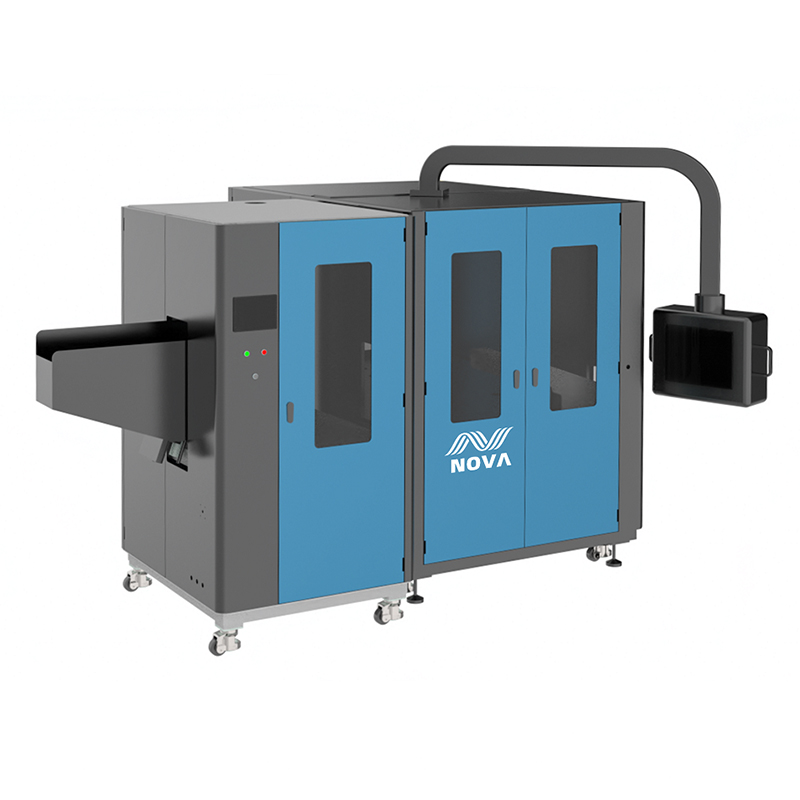
NOVA Inkjet Technology, while primarily known for inkjet solutions, also offers rotary hot stamping machines designed for the packaging sector, capable of elegantly applying logos and motifs to boxes and containers. Their approach integrates precision engineering with practical production requirements, reflecting an understanding that finishing equipment needs to perform reliably in demanding environments.
Table of Contents
- The Visual Impact That Drives Purchase Decisions
- How Rotary Hot Stamping Differs from Flatbed
- Creating Depth and Texture That Digital Printing Can't Match
- Efficiency Gains in Production Environments
- Material Versatility and Substrate Compatibility
- When Rotary Hot Stamping Makes the Most Sense
- The Role of Hot Stamping in Brand Differentiation