
 EN
EN
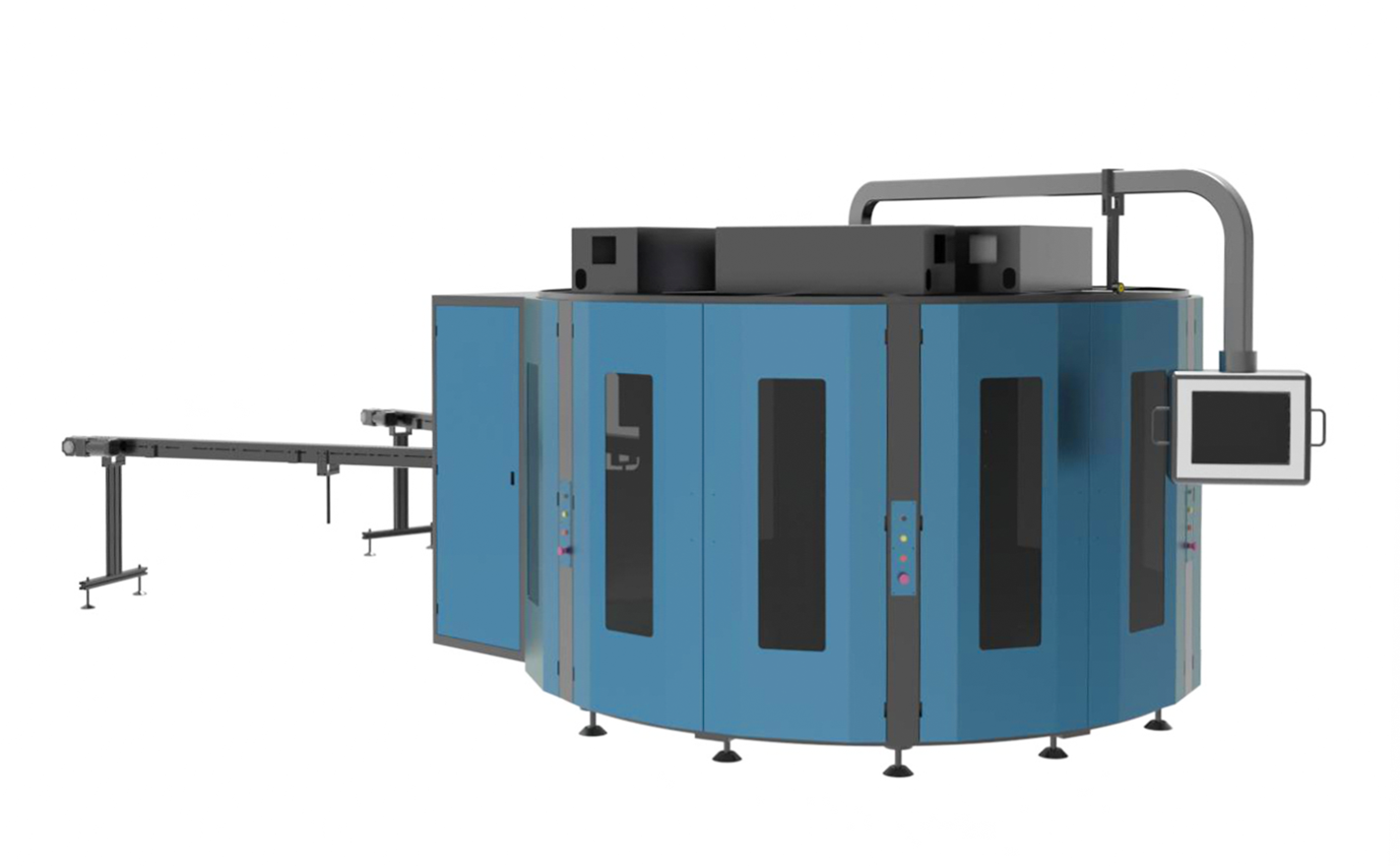
The Geometry Problem That Flatbed Printers Can't Solve
Flatbed printers are excellent tools. They print on flat surfaces with remarkable precision and speed. But the world is not flat. Bottles, cups, tubes, and cones dominate packaging and promotional product lines, and these shapes do not fit comfortably under a flatbed print head.
A rotary inkjet printer solves a geometry problem that flatbed printers cannot address without workarounds. The flatbed approach requires fixturing that rotates the object under a stationary head, but this introduces registration errors because the object's center of rotation may not align with the print head's coordinate system. Each rotation introduces slight variations that compound over the print cycle.
The rotary inkjet printer takes a different approach. The object rotates on its own axis while the print head moves in coordination. This is not a flatbed with a rotary attachment; it is a machine designed from the ground up for cylindrical and contoured surfaces. The difference shows up in the results—seamless 360-degree prints without the registration drift that plagues flatbed conversions.
What a Rotary Inkjet Printer Does That a Flatbed Cannot
The fundamental advantage of a rotary inkjet printer is continuous, uninterrupted printing around the entire circumference of a cylindrical object. A flatbed printer with a rotary attachment prints in segments—the object rotates, stops, the head prints a section, then rotates again. The seams where sections meet are visible upon close inspection, and they are a common source of rejects in high-quality applications.
Rotary inkjet printers eliminate seams through synchronized motion. The object rotates continuously while the print head fires. The rotation speed and the firing frequency are locked together, producing a seamless image that wraps around the object without interruption.
This capability is particularly important for designs that span the entire circumference—beverage labels that wrap around, cosmetic branding that covers the full bottle, or promotional graphics that need to look cohesive from any angle. A seam interrupts the visual flow and undermines the premium appearance that many brands require.
The rotary approach also handles tapered objects more gracefully. Wine bottles, perfume bottles, and many cosmetic containers are not perfect cylinders—they narrow toward the neck or flare at the base. A rotary inkjet printer adjusts the print parameters dynamically as the object rotates, maintaining consistent image quality across the changing diameter. A flatbed conversion cannot make this adjustment because the print head is fixed in position relative to the flat plane.
Speed and Throughput: The Operational Difference
Production managers care about output, and the comparison between rotary and flatbed approaches reveals significant differences in effective throughput.
A flatbed printer with a rotary attachment operates in a stop-start cycle. Load the object, rotate to position, print a segment, stop, rotate to the next position, print the next segment. The cumulative time lost to acceleration, deceleration, and positioning adds up. Each stop introduces the possibility of registration error.
A rotary inkjet printer operates continuously. Load the object, start the rotation, print the entire circumference in one pass. The cycle time is determined by the rotation speed and the print resolution, not by the number of segments. For full-wrap designs, the rotary printer completes the job in a fraction of the time required by a flatbed conversion.
| Performance Aspect | Flatbed + Rotary Attachment | Dedicated Rotary Inkjet Printer |
|---|---|---|
| Print coverage | Segmented (seams visible) | Continuous (seamless) |
| Tapered object handling | Limited or manual adjustment | Dynamic compensation |
| Cycle time | Stop-start (segment count dependent) | Continuous (one rotation) |
| Registration consistency | Drift between segments | Locked synchronization |
| Setup complexity | Multiple adjustments | Single parameter set |
| Operator skill required | Higher | Moderate |
Where the Rotary Printer Excels in Real Production
A promotional products company in the Northeast was printing custom designs on stainless steel tumblers for corporate clients. The company used a flatbed printer with a rotary fixture. Each tumbler required four print segments to achieve full coverage. The seams between segments were visible enough that clients sometimes rejected the finished products.
The company switched to a rotary inkjet printer. The change eliminated the seams entirely. The tumblers now print in a single continuous pass, and the rejection rate for seam-related defects dropped to negligible levels. The change did not increase the printer's top speed, but it reduced rework and improved customer satisfaction.
This case illustrates a broader pattern: rotary inkjet printers do not necessarily print faster than flatbed conversions in terms of raw speed, but they produce usable output at a higher rate because they eliminate the defects that require rework. The effective throughput—good pieces per hour—is significantly higher.
The Technology That Makes Rotary Printing Possible
Rotary inkjet printing relies on several technologies that flatbed printers do not require. The rotation mechanism must provide smooth, vibration-free motion. Any wobble or unevenness in the rotation translates directly into print defects.
Servo-driven rotary tables are standard in industrial rotary inkjet printers. These provide precise control over rotation speed and position, with encoders that feed back real-time data to the control system. The print head firing is synchronized with the encoder signals, ensuring that each droplet lands at the intended location regardless of minor speed variations.
The print head arrangement in a rotary printer is optimized for curved surfaces. The heads are positioned at a specific distance from the object's surface, and the ink droplets are fired at an angle that compensates for the curvature. This is different from flatbed printing, where the heads are perpendicular to the surface.
Variable data printing is native to rotary inkjet systems. Because the printing is digital, each object can carry different information—sequential serial numbers, batch-specific codes, or personalized text. A flatbed conversion can also print variable data, but the stop-start cycle makes it less efficient for high-volume applications.
The Limitations That Keep Flatbeds Relevant
Despite the advantages of rotary inkjet printers, flatbed printers remain the better choice for certain applications. Flat, rigid substrates—signage, panels, boards—are handled more efficiently on a flatbed. The flatbed's larger format size and simpler material handling make it the default choice for these applications.
Rotary printers are specialized equipment. They excel at cylindrical and contoured surfaces, but they cannot print on flat objects. A facility that handles both flat and cylindrical products may need both types of equipment, which is a capital investment decision that requires careful analysis.
The learning curve for rotary printers is steeper than for flatbeds. Operators need to understand rotation dynamics, synchronization, and the relationship between print resolution and rotation speed. This is not a barrier, but it is a consideration for facilities with high operator turnover.
A Closer Look at the Economics
The cost comparison between a flatbed with a rotary attachment and a dedicated rotary inkjet printer is not straightforward. The flatbed conversion appears cheaper upfront because it leverages existing equipment. But the total cost of ownership over several years tells a different story.
The flatbed conversion consumes more floor space because it requires the flatbed plus the fixture setup. It requires more operator attention because each segment must be monitored for registration accuracy. It produces more waste because seam-related defects require rework or scrapping. Over time, these hidden costs add up.
The dedicated rotary printer has higher upfront cost but lower operating costs. It occupies less space, requires less operator intervention, and produces fewer defects. The payback period depends on the production volume and the value of the products being printed, but for facilities with consistent cylindrical printing demand, the dedicated rotary printer often proves more economical in the long run.
The Operator Experience Difference
Operators who have run both types of equipment often express a preference for the rotary printer. The workflow is simpler: load, start, unload. There are no segment-by-segment checks, no manual adjustments between segments, and no frustration when a seam appears in the wrong place.
The control interface on a rotary printer provides real-time feedback on rotation speed, print progress, and curing status. Operators can monitor the entire process from a single screen. Troubleshooting is more straightforward because the number of variables is smaller—the system is designed for cylindrical printing, so the parameters are optimized for that application.
Training new operators on a rotary printer takes less time than training them on a flatbed conversion. The workflow is more intuitive, and the feedback is more immediate. This is a practical advantage for facilities that experience staff turnover.
The Strategic Choice for Cylindrical Production
The decision between a flatbed printer and a rotary inkjet printer ultimately comes down to the product mix. Facilities that print primarily on flat substrates should stick with flatbeds. Facilities that print primarily on cylindrical objects should invest in rotary printers. The middle ground—facilities with mixed product lines—requires a more nuanced analysis.
The trend in packaging and promotional products is toward more cylindrical and contoured shapes. Brands want distinctive bottle shapes, custom cups, and unique tubes that stand out on shelves. This trend favors rotary inkjet printing because it can handle these shapes natively, without the compromises of flatbed conversions.
NOVA Inkjet Technology has developed a range of rotary inkjet printer configurations that address the specific demands of cylindrical printing. The company's approach emphasizes system integration, with print heads, rotation mechanisms, and curing systems designed to work together seamlessly. For facilities that are serious about cylindrical printing, the rotary printer is not just an option—it is the right tool for the job.
Table of Contents
- The Geometry Problem That Flatbed Printers Can't Solve
- What a Rotary Inkjet Printer Does That a Flatbed Cannot
- Speed and Throughput: The Operational Difference
- Where the Rotary Printer Excels in Real Production
- The Technology That Makes Rotary Printing Possible
- The Limitations That Keep Flatbeds Relevant
- A Closer Look at the Economics
- The Operator Experience Difference
- The Strategic Choice for Cylindrical Production